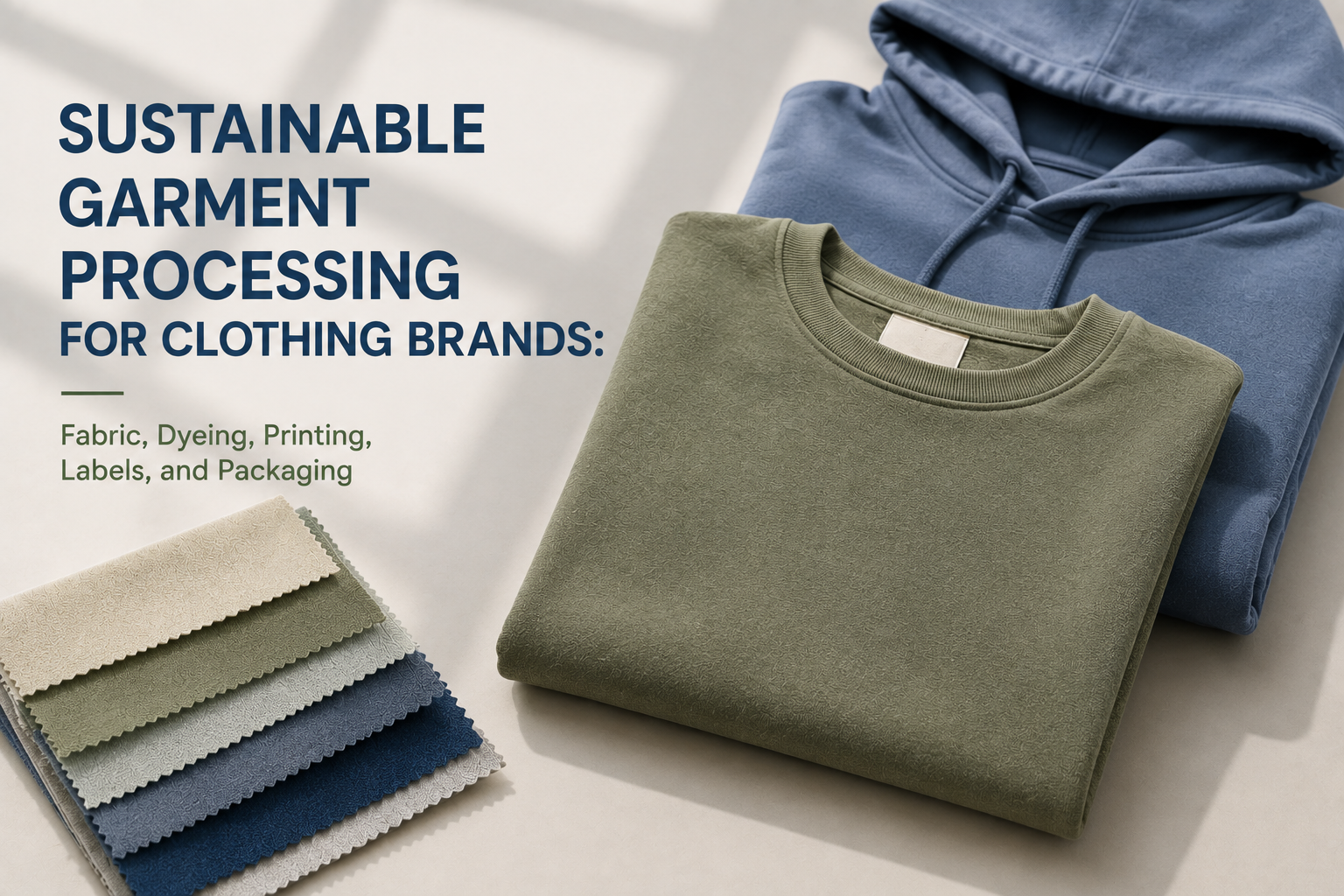
Hemp bamboo cotton shirts are becoming a practical choice for sustainable apparel brands that want comfort, natural texture, durability, and a stronger fabric story for premium basics. For many brands in 2026, this blend is not only about sustainability language. It is also about making shirts and tops that feel better, wear well, and are easier to develop into stable commercial products.
Sustainable brands use hemp bamboo cotton fabric for shirts because it can balance three useful qualities in one material direction. Hemp can add natural texture and durability. Bamboo can improve softness and drape. Cotton can improve stability, structure, and everyday wearability. The final fabric still depends on composition, GSM, knit or woven structure, and finishing. A hemp-rich jersey and a cotton-rich interlock will not feel the same, even if both are sold under similar names. That is why brands should test real samples before bulk production instead of judging the blend only by a swatch or supplier description.
This guide covers fabric composition, product use, hemp vs bamboo vs cotton comparison, GSM, sampling, and manufacturer planning for hemp bamboo cotton shirt development.
What Is a Hemp Bamboo Cotton Shirt?
A hemp bamboo cotton shirt uses a blended fabric that combines hemp, bamboo-derived fiber, and cotton, with the ratio adjusted for softness, texture, structure, and product use.
A hemp bamboo cotton shirt is made from a fabric blend rather than one single fiber. In most cases, the goal is to combine the strengths of each component into a more balanced shirt fabric.
Hemp can add:
- natural texture
- dry hand feel
- durability
- a stronger material story
Bamboo-derived fiber can add:
- softness
- smoother drape
- a more fluid surface feel
Cotton can add:
- structure
- stability
- easier daily wear
- more predictable production behavior
The exact ratio can change depending on the desired softness, texture, cost, shrinkage control, and product type. A softer casual tee may need a different blend ratio from a more structured long sleeve top.
One important sourcing point: in apparel, “bamboo” often means bamboo-derived viscose or another bamboo-based regenerated fiber, not a mechanically processed bamboo bast fiber. That is why brands should always confirm the exact fiber name and fabric composition with the supplier before making sustainability claims or approving the sample.
The fabric can also be built in different forms. It may be:
- knitted for T-shirts and Henley shirts
- woven for casual shirts and resort-style tops
Many brands first compare a hemp bamboo shirt before deciding whether cotton should be added for better commercial balance.
Why Add Cotton to Hemp and Bamboo Blends?
Cotton helps make hemp and bamboo blends easier to structure, easier to scale, and easier to use for everyday commercial basics.
From a manufacturer’s point of view, cotton often plays a practical role in this blend.
It can help improve fabric structure. That matters because a shirt fabric should not only feel soft. It also needs to hold its shape, stay stable after washing, and support consistent sewing during production.
Cotton can also make the fabric easier to use for everyday T-shirts and basics. Some hemp-rich or bamboo-rich blends can feel beautiful in theory, but more difficult in repeated production if the final fabric is too unstable, too fluid, or too hard to control.
In practical development, cotton can help with:
- production stability
- repeated orders
- printing
- dyeing
- washing
- size control
It can also help balance cost compared with more niche or more experimental natural fiber blends. That does not mean cotton always makes the blend “better.” It means it often makes the blend easier to commercialize.
For startup brands, a hemp bamboo cotton blend may be easier to develop than a more experimental natural fiber blend because it can balance sustainability, comfort, and production practicality.
This is also where the relationship between hemp and cotton becomes important. If you are comparing fiber roles more directly, see organic cotton vs hemp clothing.
How Does Hemp Bamboo Cotton Compare With Hemp Bamboo Fabric?
Hemp bamboo fabric often feels more distinctive and fluid, while hemp bamboo cotton fabric usually gives a more balanced result for commercial basics and repeated production.
This comparison matters because some brands like the story of hemp bamboo fabric, but later realize they need more structure and daily wearability.
Here is a practical comparison:
| Fabric option | Hand feel | Texture | Drape | Production stability | Cost level | Best products |
|---|---|---|---|---|---|---|
| Hemp bamboo fabric | soft-dry, often more fluid | more natural and distinctive | higher | medium | medium to higher | premium tees, soft tops, lounge styles |
| Hemp bamboo cotton fabric | balanced, soft with more body | natural but cleaner | medium | higher | medium | commercial basics, Henleys, long sleeve tops |
| Hemp cotton fabric | more structured, drier | stronger natural texture | lower to medium | higher | medium | structured tees, basics, casual tops |
| Bamboo cotton fabric | softer and smoother | cleaner and less textured | medium to higher | higher | medium | soft basics, lounge tops, comfort-led shirts |
Hemp bamboo fabric may feel more distinctive and fluid. That can be useful when a brand wants a softer premium natural product with a more obvious material story.
Hemp bamboo cotton fabric may offer better balance for commercial basics. It is often easier to position for regular T-shirts, long sleeve shirts, and premium everyday tops.
Hemp cotton fabric may feel more structured and natural. Bamboo cotton fabric may feel softer and smoother.
Brands should not choose by fiber name only. They should check:
- fabric structure
- GSM
- washing test
- shrinkage
- final hand feel
If you want a broader material comparison, this article is also useful: bamboo, hemp, and organic cotton.
What Products Can Brands Make With Hemp Bamboo Cotton Fabric?
Hemp bamboo cotton fabric can work across many premium basics, especially when the fabric structure is matched correctly to the product.
This blend is useful because it can be adjusted for different categories.
Suitable products include:
- T-shirts
- long sleeve T-shirts
- Henley shirts
- casual shirts
- resort shirts
- lounge tops
- lightweight sweatshirts
- soft women’s basics
- men’s premium basics
- relaxed fit tops
The product match matters as much as the fiber blend.
T-shirts and long sleeve tops
For these, jersey or interlock usually makes the most sense. Jersey gives a familiar casual feel. Interlock can give more body and cleaner surface stability.
Henley shirts
For Henleys, jersey, rib, or interlock can all work depending on the structure and fit direction. If your brand is developing a Henley direction, see hemp bamboo long sleeve Henley T-shirt.
Casual shirts or resort tops
For these, woven hemp bamboo cotton fabric can be more suitable. A woven version can bring more shape and shirt character than a knitted jersey.
Soft lounge tops
For softer lounge products, a smoother bamboo cotton or hemp bamboo cotton blend may work better than a very dry or textured fabric.
Premium basics
For premium basics, medium-weight fabric with better recovery, stable neckline, and clean stitching is usually the better direction.
This is also where brands may compare the blend with hemp cotton T-shirt development. Hemp bamboo cotton T-shirts can feel softer and more fluid, while hemp cotton T-shirts may feel more structured and dry-natural.
What GSM Should Brands Choose for Hemp Bamboo Cotton Shirts?
GSM should be chosen by product type, season, and hand feel target, not only by fiber blend.
From a B2B development point of view, GSM affects how the same blend behaves in the real garment. A lighter shirt can feel breathable and fluid. A heavier one can feel more premium, stable, and structured.
A simple reference looks like this:
- 160–190 GSM: lightweight summer T-shirts or resort tops
- 200–240 GSM: regular T-shirts, Henley shirts, and premium basics
- 250–300 GSM: heavier long sleeve tops or structured casualwear
- 300+ GSM: not usually needed for shirts unless the brand wants a sweatshirt-like feel
Lightweight fabrics are suitable for:
- summer T-shirts
- resort tops
- breathable shirts
Midweight fabrics are suitable for:
- premium basics
- long sleeve T-shirts
- daily wear
Heavier fabrics are better for:
- structured tops
- fall layering
- relaxed premium basics
The same fiber blend can feel very different depending on:
- GSM
- yarn count
- knitting structure
- washing
- finishing
That is why brands should not approve a blend name without checking the real finished fabric. If you want a wider fabric-weight reference across categories, see GSM for long sleeve T-shirts, crewneck sweatshirts, and joggers.
Are Hemp Bamboo Cotton Shirts Suitable for Spring/Summer or Fall/Winter?
This blend can work for both seasons, but only if the GSM and structure are chosen correctly.
Hemp bamboo cotton is not automatically a summer fabric or a winter fabric. The final season depends on:
- weight
- construction
- fit
- finishing
For spring/summer, brands should choose:
- lighter jersey
- breathable woven fabric
- resort-style shirts
For fall/winter, brands can choose:
- midweight long sleeve T-shirts
- Henley shirts
- layering tops
Regional planning also matters.
- US and European brands may use midweight versions for spring/fall basics.
- Australian brands may prefer lighter versions for warm-weather casualwear.
- Middle East brands may prefer breathable lighter tops with a premium natural fabric story.
This is why the same blend can sit in different seasonal strategies depending on the market. Many sustainable brands in 2026 are focusing on organic cotton, hemp, bamboo, low-impact materials, and durable everyday products, but the seasonal result still depends on technical decisions, not material names alone.
What Should Brands Confirm Before Sampling Hemp Bamboo Cotton Shirts?
Brands should confirm the full fabric and product setup before sampling, not only the blend name.
A practical checklist includes:
- exact fabric composition
- bamboo fiber type or bamboo-derived viscose description
- GSM
- knit or woven structure
- shrinkage rate
- color fastness
- hand feel after washing
- neckline stability
- sleeve and hem finishing
- print or embroidery compatibility
- label placement
- size range
- MOQ
- sample timeline
- bulk production timeline
- packaging requirements
Natural and blended fabrics may need sample testing and revision before bulk production. Brands should not judge the fabric only from a swatch. They should check a finished sample after washing.
This matters even more if the brand wants stronger sustainability claims. In that case, it is worth confirming:
- fiber source
- processing route
- dyeing method
- certification
- supplier documents
That is especially important for bamboo-related claims, because “bamboo” in market language can refer to different regenerated cellulose routes rather than a single direct fiber type.
When planning sourcing and development timing, this guide is also useful: hemp, bamboo, and organic cotton production lead times.
How Can Custom Labels and Packaging Support Premium Basics?
Premium basics need quiet but clear branding, and labels and packaging help build that finish.
Premium basics usually do not rely on loud decoration. They often feel stronger when the branding details are clean and controlled.
Brands can use:
- neck labels
- heat transfer labels
- hem tags
- care labels
- hang tags
- custom packaging
For soft shirts and loungewear tops, label comfort is important. A stiff label can weaken an otherwise premium product.
Heat transfer labels can be suitable for smooth, soft products where comfort matters. Woven labels or hem tags can add a stronger brand look when the placement and material are chosen carefully.
If you are planning the label system, this page is useful: where should labels go in modern apparel.
How Can Hempspring Help Brands Develop Hemp Bamboo Cotton Shirts?
Hempspring can help brands move from fabric idea to finished product through practical development support.
From a B2B manufacturer perspective, hemp bamboo cotton shirt development is usually easier when the brand and factory align early on fabric feel, product type, GSM, and finishing direction.
Support can include:
- fabric sourcing
- hemp, bamboo, organic cotton, Tencel, modal and blended fabric options
- fabric weight suggestions
- sample development
- fit adjustment
- neckline and sleeve details
- custom print or embroidery
- custom labels
- custom packaging
- OEM/ODM manufacturing
This can be useful for:
- startups building their first premium basics range
- growing brands refining their shirt program
- overseas brands in the US, Australia, Europe, Middle East, and South America
The goal is not to push one blend for every project. It is to help brands match the fabric option to the product plan, target market, and production reality in a more grounded way.
Conclusion
Hemp bamboo cotton shirts can be a strong option for sustainable brands that want comfort, natural texture, and better production practicality. But the final result depends on composition, GSM, structure, finishing, and sample testing. If you are planning custom development, it helps to share reference images, target fabric feel, GSM preference, and the product plan early, so the fabric and garment can be matched more accurately.