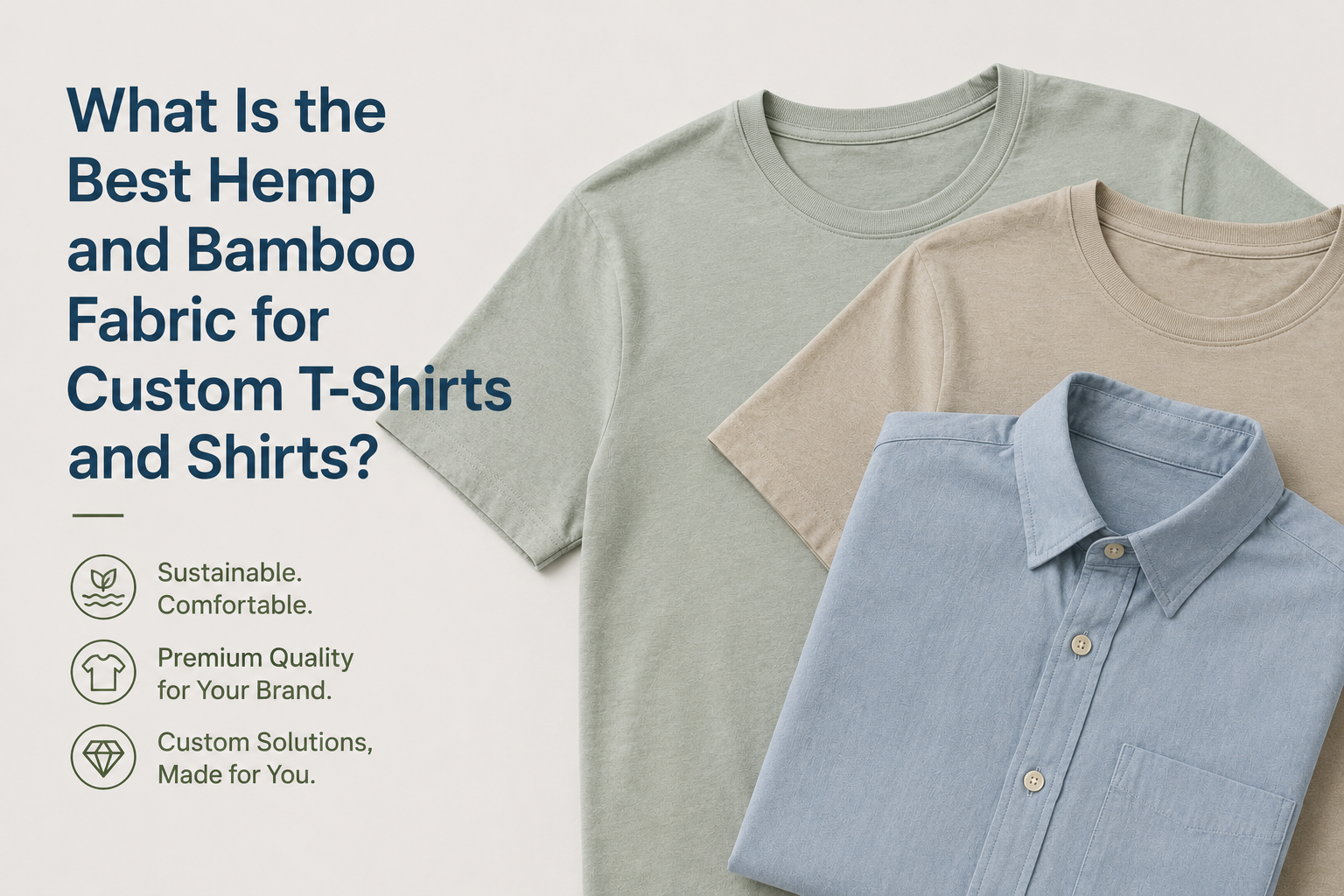
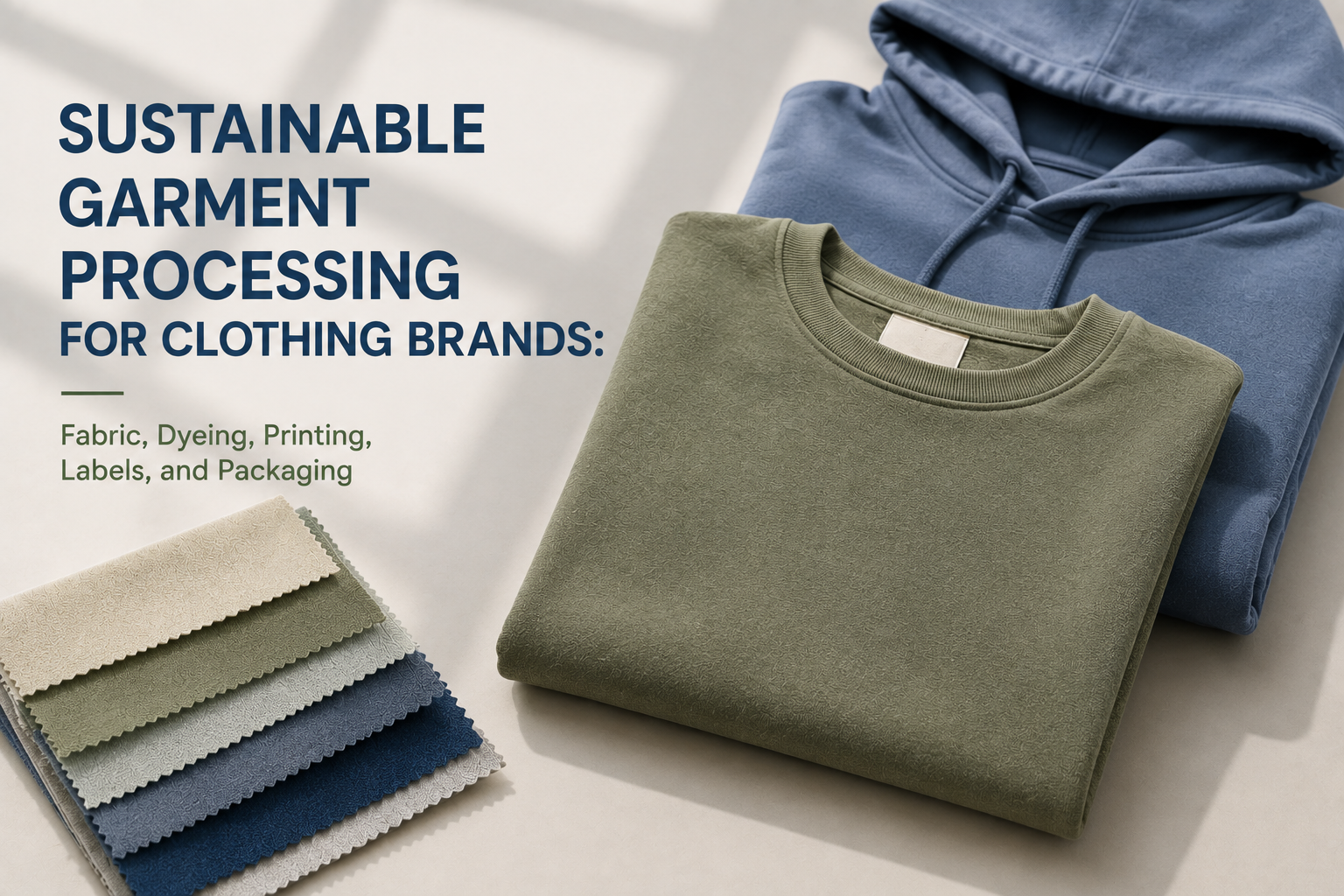
Hemp bamboo shirts are a useful fabric direction for brands that want softness, breathability, and a more premium natural feel. For sustainable apparel brands, this blend can sit between comfort and texture, which makes it interesting for basics, resort tops, and casual layering pieces.
Yes, hemp bamboo fabric can be a very good option for shirts, especially when a brand wants a softer hand feel than pure hemp, but more texture and distinction than standard cotton basics. In most cases, the final result depends on the exact blend, fabric structure, GSM, and finishing. Hemp can add durability and a natural dry touch, while bamboo can improve softness and drape. For sustainable apparel brands, hemp bamboo shirts can work well for T-shirts, long sleeve tops, Henleys, lounge tops, and lightweight casual basics.
This article covers hand feel, durability, breathability, shrinkage, product use, GSM, and what brands should confirm before sampling hemp bamboo shirts.
What Is a Hemp Bamboo Shirt?
Short answer: a hemp bamboo shirt is usually made from a blend of hemp and bamboo-based fiber, sometimes mixed with organic cotton or spandex to improve softness, balance, or stretch.
In product development, “hemp bamboo shirt” usually does not mean one fixed formula. It often refers to a fabric blend where hemp gives natural texture and strength, while bamboo improves softness and drape. Depending on the target product, some mills or suppliers may also add organic cotton for balance or a small amount of spandex for stretch recovery.
Brands should also pay attention to one important detail: “bamboo” in apparel is often bamboo-derived viscose or another regenerated bamboo-based cellulose fiber, not a rough natural bast fiber used in the same way as hemp. That is why buyers should always confirm the exact composition, not only the marketing name. This is also why it helps to understand the difference between the fibers themselves before approving a blend. See hemp vs bamboo sustainable fabric when comparing hemp and bamboo more closely.
From a manufacturer’s point of view, this matters because the same “hemp bamboo shirt” can feel very different depending on whether the fabric is mostly hemp-rich, bamboo-rich, knit, woven, washed, brushed, or blended with other fibers.
Why Do Sustainable Brands Choose Hemp Bamboo Blends?
Short answer: sustainable brands often choose hemp bamboo blends because they offer a softer feel than pure hemp, with better drape, breathable comfort, and a more distinctive natural surface than basic cotton alone.
Many brands like the idea of hemp, but pure hemp can feel too dry, too crisp, or too firm for certain shirt categories. Bamboo can help soften that result. This is one of the main reasons the blend works well for comfort-led sustainable basics.
A good hemp bamboo blend can offer:
- a softer feel than 100% hemp
- better drape for casual tops
- breathable everyday comfort
- a natural but more refined surface
- stronger eco-conscious positioning
- a premium feel for basics without becoming too technical
This is especially useful for brands that want their basics to feel a little different from ordinary cotton jersey. Bamboo can help smooth the hand feel, while hemp adds character, texture, and often better long-term durability.
That is also why some brands choose hemp bamboo instead of standard cotton basics for premium T-shirts, relaxed Henleys, soft tops, or elevated lounge pieces. If you want a broader comparison between hemp, bamboo, and organic cotton in apparel, see bamboo and hemp clothing.
What Types of Products Can Use Hemp Bamboo Fabric?
Short answer: hemp bamboo fabric can work across both tops and lighter comfort categories, but the right fabric structure matters as much as the fiber blend.
This blend is flexible, but not every hemp bamboo fabric is right for every product.
For example:
T-shirts
A hemp bamboo jersey can work well for short sleeve or relaxed everyday tees. It can give a softer, more natural feeling alternative to standard cotton jersey.
Long sleeve T-shirts
A slightly heavier jersey or interlock version can work well for transitional long sleeve tops, especially when the brand wants softness with more body.
Henley shirts
Hemp bamboo can be a strong direction for Henley development, especially if the brand wants a softer natural blend with a premium casual feel. See hemp bamboo long sleeve Henley T-shirt for a relevant product direction.
Lounge tops and soft basics
These often benefit from a softer hand feel, which makes bamboo-rich blends useful when comfort is a priority.
Resort shirts and casual tops
If the fabric is woven rather than knit, a hemp bamboo shirt can also work for resort styles or relaxed button-front tops.
Lightweight hoodies
For lightweight casual layering, a hemp bamboo French terry or soft knit blend may work, depending on weight and season.
Women’s soft basics
Many women’s tops, lounge sets, and comfort-led silhouettes benefit from blends that have more drape and softness than pure hemp.
Fabric structure matters here:
- jersey works well for tees and soft tops
- rib can work for close-fit tops or tanks
- interlock can give more body and coverage
- French terry can suit light hoodies or elevated loungewear
- woven fabric can work for resort shirts or lighter structured tops
It is also useful to compare this direction with hemp cotton T-shirt development, because hemp cotton and hemp bamboo do not create exactly the same hand feel or product story.
How Does Hemp Bamboo Compare with Organic Cotton?
Short answer: organic cotton is often easier and more familiar for many basics, while hemp bamboo can create a softer premium hand feel with a more distinctive natural story.
Here is a practical comparison:
| Factor | Hemp Bamboo | Organic Cotton |
|---|---|---|
| Softness | Usually soft, especially with bamboo-rich blends | Usually soft and familiar |
| Texture | More natural and distinctive | Cleaner and more standard |
| Durability | Often stronger than softer cotton basics, depending on blend | Good, but varies by knit and weight |
| Breathability | Usually good for casual shirts and soft tops | Usually good and stable |
| Shrinkage control | Needs testing and depends on blend/finish | Often easier to predict |
| Cost | Often higher than basic cotton programs | Usually easier for entry-level basics |
| Brand positioning | More premium and material-driven | Easier, broader, more familiar |
| Suitable products | Tees, Henleys, lounge tops, relaxed basics | Core T-shirts, basics, easier scaling |
For many brands, organic cotton remains the easiest starting point because it is familiar, easier to explain to customers, and often simpler to scale. Hemp bamboo becomes more interesting when the brand wants something with a more natural feel, stronger material identity, and a softer but still textured hand feel.
If you want a broader cotton-hemp comparison, see organic cotton vs hemp clothing.
What Should Brands Confirm Before Sampling Hemp Bamboo Shirts?
Short answer: brands should confirm more than the fiber name. The exact composition, GSM, structure, and wash result all matter before approving a hemp bamboo shirt.
This is where many delays begin.
A buyer may say, “We want a hemp bamboo shirt,” but that still leaves many open questions. Before sampling, I would strongly suggest confirming:
- exact composition
- GSM
- knit or woven structure
- shrinkage rate
- color fastness
- hand feel after washing
- neckline stability
- print or embroidery compatibility
- label placement
- size range
Natural blends can feel excellent, but they may also need more fabric testing and sample revision before mass production. That is normal. Hemp-rich and bamboo-rich blends can react differently after washing, finishing, or dyeing, so early testing protects both fit and expectation.
This is especially important when the brand wants:
- a specific premium softness
- a certain dry natural feel
- a fabric that must hold shape after wash
- embroidery or screen printing on the finished garment
If you are discussing sourcing or sampling lead times, this page is also helpful: hemp, bamboo, and organic cotton production lead times.
Is Hemp Bamboo Fabric Suitable for Fall/Winter or Spring/Summer?
Short answer: it can work for both, but only if the brand checks GSM, structure, finishing, and product category instead of relying on the fiber name alone.
For spring/summer, hemp bamboo usually works well in:
- lightweight jersey
- breathable shirts
- resort tops
- T-shirts
For fall/winter, it can also work in:
- heavier jersey
- long sleeve tops
- layering pieces
- soft lounge tops
The key point is simple: hemp bamboo is not one fabric weight. A lighter jersey can feel breathable and airy, while a denser knit can support more body for cooler seasons.
Brands should not choose fabric only by fiber name. They should also check:
- GSM
- structure
- finishing
- target season
- final product type
If you are planning weight by season, this internal guide fits naturally here: what GSM should a long sleeve T-shirt, crewneck sweatshirt, and jogger be for fall vs winter.
How Can Hempspring Help Brands Develop Hemp Bamboo Shirts?
Short answer: Hempspring can support the process from material planning to final product details, especially for overseas brands building custom sustainable basics.
From a B2B manufacturer point of view, hemp bamboo shirts work best when the development process is clear. That usually means aligning the blend, the fabric structure, the fit, and the product use before bulk planning begins.
At Hempspring, support for hemp bamboo shirt development can include:
- fabric sourcing
- sample development
- fit adjustment
- custom neckline development
- custom buttons for Henley styles
- labels and packaging
- OEM/ODM support
- overseas brand support
This is useful for brands developing:
- custom T-shirts
- long sleeve tops
- Henley shirts
- lounge tops
- resort shirts
- casual basics
The goal is not only to produce the shirt, but to make sure the final fabric actually matches the brand’s target hand feel, season, and customer positioning.
Conclusion
Hemp bamboo fabric can be a strong option for brands that want softness, natural texture, and a more elevated sustainable product story. But the final result depends on the real blend, GSM, structure, finishing, and sample testing. For custom shirt development, the safest path is to confirm the details early, test the wash result, and align the fabric choice with the actual product category rather than relying on the fiber name alone.