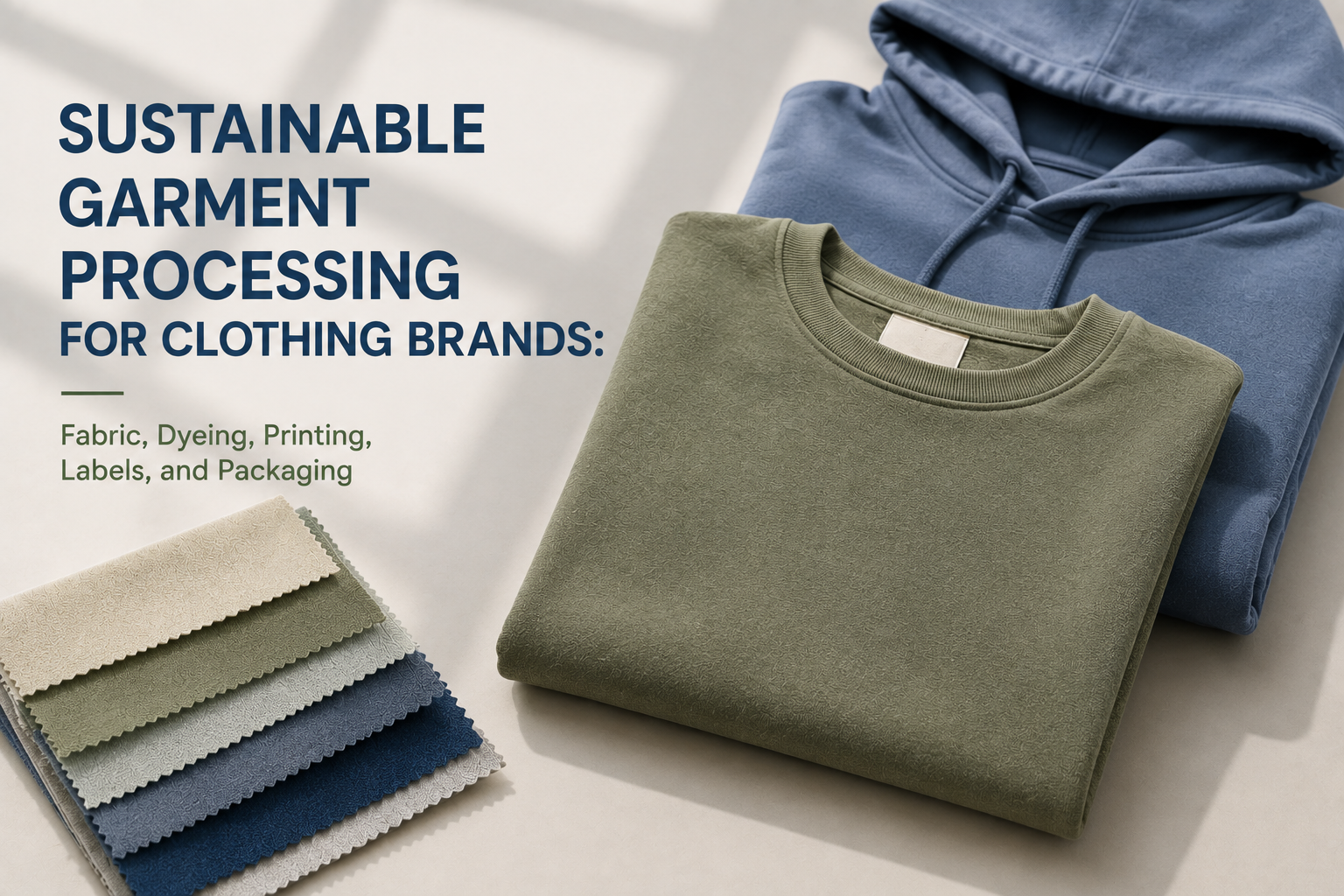
French terry and fleece are two of the most common fabrics for sweatshirts and hoodies, but brands should not choose by name alone. The better option depends on comfort, warmth, weight, decoration method, season, and target market. For custom development, these details matter before sampling starts, not after bulk production is already planned.
The main difference between French terry and fleece for sweatshirts is that French terry is usually lighter, more breathable, and better for transitional weather, while fleece is usually warmer, thicker, and better for winter products. Both fabrics can be used for sweatshirts and hoodies, but the right choice depends on GSM, fiber content, brushing, finishing, target season, and decoration method. A medium French terry sweatshirt and a heavy brushed fleece hoodie will perform very differently. That is why brands should test real samples before bulk production instead of choosing fabric only from a swatch or fabric name.
This guide compares French terry and fleece from a clothing manufacturer’s perspective, including comfort, warmth, decoration, GSM, product use, and sampling decisions.
What Is French Terry Fabric?
French terry is a knit fabric with a smooth outer face and looped texture on the inside, often used for breathable sweatshirts, hoodies, joggers, and transitional basics.
French terry is one of the most useful fabrics for brands that want a sweatshirt product that feels wearable across seasons. It usually has a cleaner outer surface than fleece and a looped inside rather than a brushed, fuzzy one.
That construction makes it popular for:
- sweatshirts
- hoodies
- joggers
- lounge sets
- transitional-season basics
From a development point of view, French terry can be made from:
- organic cotton
- cotton blends
- hemp cotton
- bamboo cotton
- other blended yarns depending on product goals
It is often breathable and comfortable for daily wear. This is why many brands use it when they want a product that can work for spring, autumn, mild winter, or indoor/outdoor lifestyle use.
For brands looking at broader hoodie fabric decisions, this article is also useful: French Terry vs Brushed Fleece.
What Is Fleece or Brushed Fleece Fabric?
fleece, especially brushed fleece, is a knit fabric whose inner side is brushed to create a warmer, softer, and more insulating surface.
Brushed fleece is often chosen when a brand wants the product to feel warmer, softer, and more winter-ready. Instead of keeping the looped back visible like French terry, the inside is brushed to create a fuzzy texture.
This makes it suitable for:
- winter hoodies
- sweatshirts
- joggers
- sweatpants
- warm loungewear
- holiday apparel
Brushed fleece can feel warmer and cozier than regular French terry. That is why it is commonly used in cold-weather collections and gift-led seasonal products.
Depending on the brand’s needs, fleece can be made from:
- organic cotton
- cotton polyester blends
- recycled blends
- other fiber combinations
For sustainable brands, organic cotton brushed fleece or cotton-rich fleece can be a practical choice when the goal is a warmer, more premium Fall/Winter sweatshirt.
French Terry vs Fleece: Which Is Warmer?
fleece is usually warmer, while French terry is usually more breathable.
In most cases, fleece feels warmer because the brushed inner surface traps more air and feels softer against the skin. French terry usually allows more airflow and feels less insulating.
That said, brands should not compare only by fabric name. GSM, fiber content, thickness, and finishing can all change the result.
A heavy French terry can feel warmer than a very light fleece. So the real question is not only “French terry or fleece?” It is also:
- how heavy is the fabric?
- what fiber blend is used?
- how is the inside finished?
- what market is the product for?
Practical examples:
- Fall sweatshirt: French terry, 280–360 GSM
- Winter sweatshirt: brushed fleece, 320–450 GSM
- Mild-weather hoodie: medium French terry
- Cold-weather hoodie: heavier brushed fleece
For many brands, the most useful approach is to match warmth level to the launch season and selling region, not to assume that one fabric is always better.
Which Fabric Is Better for Comfort and Daily Wear?
French terry is often better for breathable daily wear, while fleece is better for cozy winter comfort.
Comfort depends on how the garment is meant to be worn.
French terry is often better for:
- layering
- transitional weather
- indoor/outdoor daily wear
- year-round casual basics
- athleisure or light lounge sets
Fleece is often better for:
- cozy comfort
- winter drops
- holiday products
- cold-weather lounge sets
- warm gifting categories
For loungewear or athleisure basics, brands should also think beyond the main body fabric. Comfort is affected by:
- hand feel after washing
- shrinkage
- stretch
- recovery
- skin comfort
- label choice
- seam finishing
- rib quality
For sensitive or premium products, those details matter just as much as the body fabric.
This matters especially for brands building softer collections. If comfort-led development is part of your plan, this article fits well here: sustainable loungewear brand.
Which Fabric Is Better for Printing, Embroidery, and Decoration?
both fabrics can work for decoration, but the better choice depends on surface smoothness, thickness, and the decoration method.
French terry and fleece can both support printing and embroidery. But they do not behave exactly the same way.
A smoother outer surface is usually better for:
- clean screen print
- water-based print
- digital print
This is one reason French terry often works well for graphic sweatshirts where a cleaner print surface matters.
Heavier fleece can work well for:
- embroidery
- appliqué embroidery
- puff print
- flock print
- holiday graphics
But fleece still needs a stable surface. If the outer face is not smooth enough, decoration quality may become less controlled.
Brands should always test decoration on the real fabric before bulk production.
Useful decoration methods to consider:
- water-based print
- screen print
- digital print
- embroidery
- appliqué embroidery
- puff print
- flock print
- Christmas graphics
- small chest logo
- large back print
Decoration should also be planned together with branding details. For that reason, this page is also relevant: custom labels and apparel branding.
Which Fabric Is Better for Christmas Sweatshirts and Holiday Collections?
brushed fleece is often better for cozy winter holiday products, while French terry is better for lighter holiday sweatshirts or warmer markets.
For Christmas sweatshirts, many brands prefer brushed fleece because it supports the emotional idea of warmth, comfort, and gifting. It often feels more winter-ready and more aligned with holiday apparel.
French terry is still useful for holiday products in:
- warmer regions
- indoor gifting
- lighter festive drops
- more breathable casual holiday collections
Market direction matters here.
- Brands targeting the US, Canada, Northern Europe, or colder regions may prefer brushed fleece.
- Brands targeting Australia, the Middle East, or indoor holiday gifting may prefer French terry or midweight cotton blends.
Christmas graphics, embroidery, Fair Isle-inspired prints, and gift-ready packaging should also be planned early, because decoration and packaging can change both timeline and cost.
If your brand is developing holiday sweatshirt products, this product page is a natural reference: custom organic cotton Christmas sweatshirt
What GSM Should Brands Choose for French Terry and Fleece Sweatshirts?
the right GSM depends on target market, climate, silhouette, shipping weight, and decoration method.
A simple GSM reference looks like this:
| GSM Range | Typical Use |
|---|---|
| 240–280 GSM | lightweight sweatshirt or summer/fall layering |
| 280–340 GSM | regular French terry sweatshirt |
| 320–380 GSM | midweight hoodie or sweatshirt |
| 360–450 GSM | winter brushed fleece hoodie or sweatshirt |
| 450+ GSM | heavy premium winter hoodie when the brand wants a very thick product |
These ranges are only guides, not fixed rules. The same GSM can still feel different depending on:
- fiber composition
- yarn structure
- brushing level
- finishing
- wash treatment
Brands should not choose GSM only for “premium feel.” They should match GSM to:
- climate
- product use
- target market
- price level
- freight expectations
- decoration method
For a broader GSM planning view across basics, this internal page is useful: GSM for long sleeve T-shirts, crewneck sweatshirts, and joggers.
How Should Brands Choose Fabric by Product Type?
brands should match fabric to the actual product role, not assume one sweatshirt fabric works for every category.
Here is a practical breakdown:
Crewneck sweatshirt
- French terry for lighter basics
- fleece for winter and holiday drops
Hoodie
- French terry for transitional wear
- fleece for warmth
Joggers
- French terry for structure and breathability
- fleece for cozy winter sets
Lounge sets
- French terry for year-round comfort
- fleece for cold-weather comfort
Christmas sweatshirt
- fleece for cozy gifting
- French terry for lighter markets
Premium basics
- organic cotton French terry
- cotton-rich fleece
depending on season and market
This is why product planning matters. Fabric should support the role of the product, not fight against it.
If you are planning multiple basics together, this article fits naturally here: fall/winter basics collection
What Should Brands Confirm Before Sampling Sweatshirt Fabric?
brands should confirm the full sweatshirt setup before sampling, not just the fabric name.
A practical checklist includes:
- fabric type: French terry, fleece, brushed fleece, or other knit fabric
- fiber composition
- GSM
- brushed or unbrushed interior
- shrinkage rate
- color fastness
- surface smoothness for printing
- embroidery compatibility
- rib quality
- neckline and cuff recovery
- inside hand feel
- washing performance
- MOQ
- sample time
- bulk production time
- label and packaging requirements
- target launch date
Brands should not choose fabric only from a swatch. A finished sample is important because sweatshirt fit, rib recovery, printing effect, and washing performance can change after garment construction.
When planning sourcing and sample timing, this page is also useful: hemp, bamboo, and organic cotton production lead times
How Can Hempspring Help Brands Develop Custom Sweatshirts and Hoodies?
Hempspring can help brands turn fabric ideas into practical sweatshirt and hoodie development plans.
From a B2B custom development point of view, sweatshirt fabric decisions usually work best when the brand confirms:
- warmth target
- GSM direction
- decoration method
- fit level
- seasonal calendar
before bulk planning starts
Hempspring can support with:
- organic cotton French terry
- organic cotton brushed fleece
- hemp cotton French terry
- bamboo cotton fleece options if suitable
- custom sweatshirt and hoodie development
- sample making
- fit adjustment
- GSM suggestions
- print, embroidery, appliqué, and holiday graphics
- custom labels, hang tags, and packaging
- OEM/ODM production
This is useful for:
- startups building first drops
- growing apparel brands
- overseas brands in the US, Australia, Europe, Middle East, and South America
The goal is not to push one fabric as always better. It is to help brands match product type, market, decoration, and season more clearly.
Conclusion
French terry is usually better for breathable, transitional, everyday sweatshirts. Fleece is usually better for warm, cozy, winter, and holiday sweatshirts. The best choice depends on product type, market, GSM, decoration method, and sampling results. If you are planning a custom sweatshirt or hoodie program, it helps to share your target fabric weight, reference images, decoration ideas, and launch timeline early so the fabric direction can be tested more accurately.