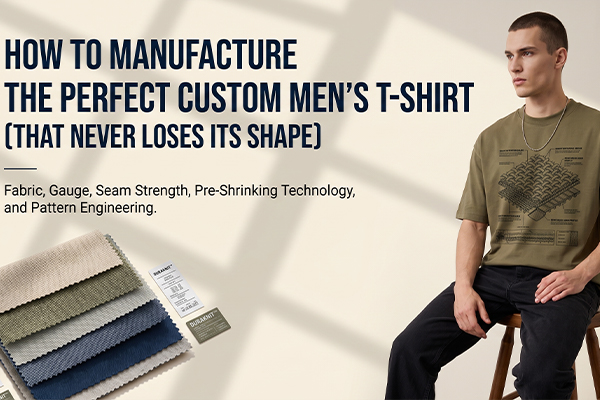
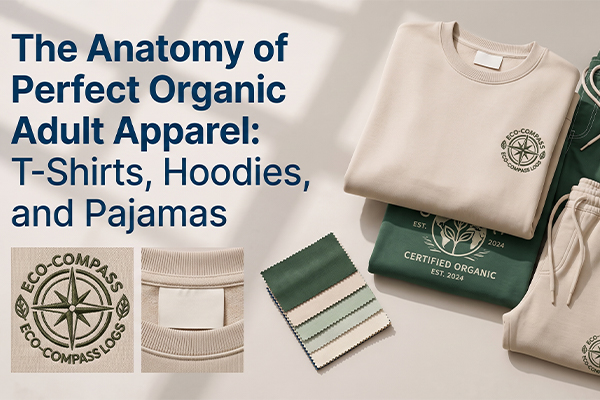
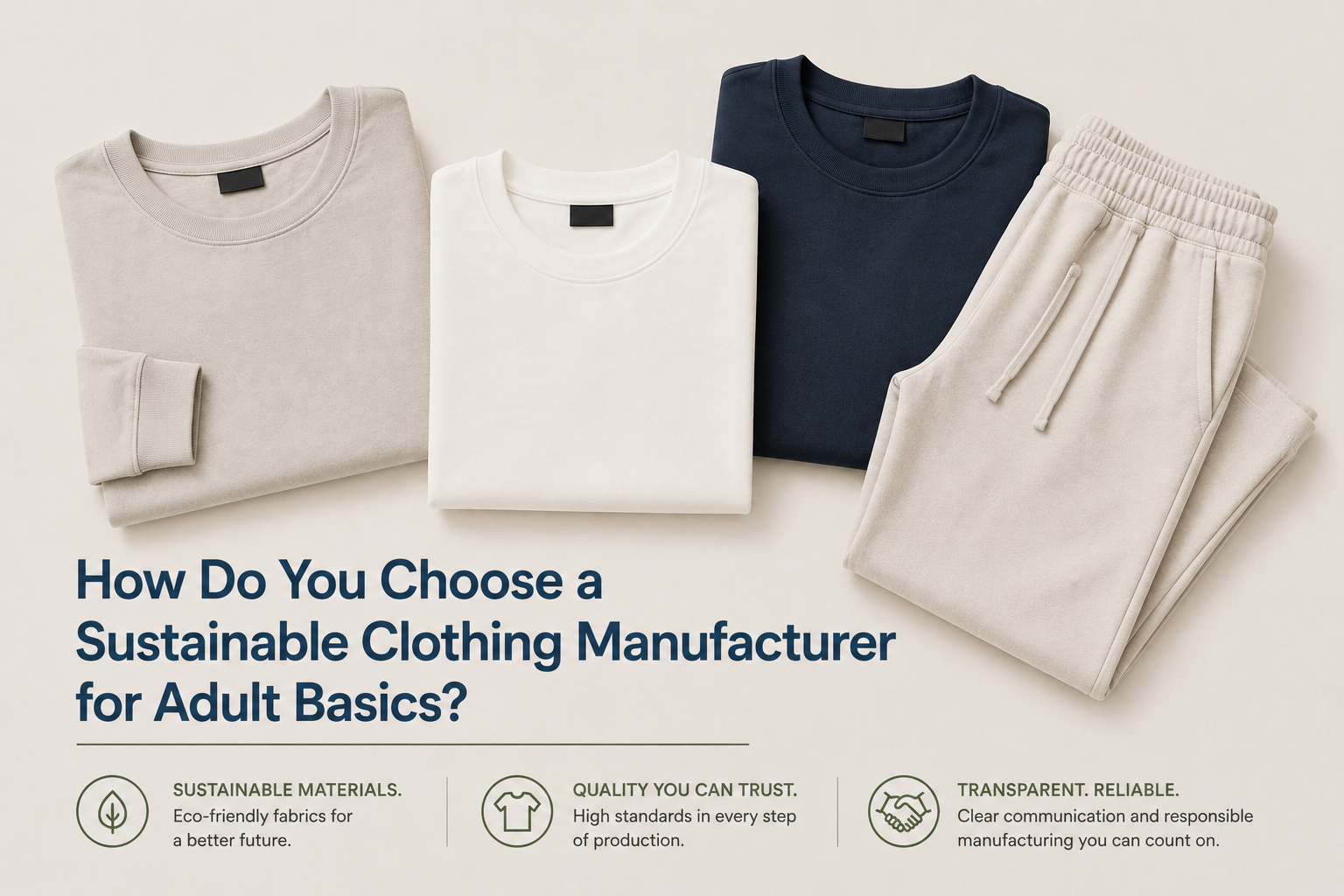
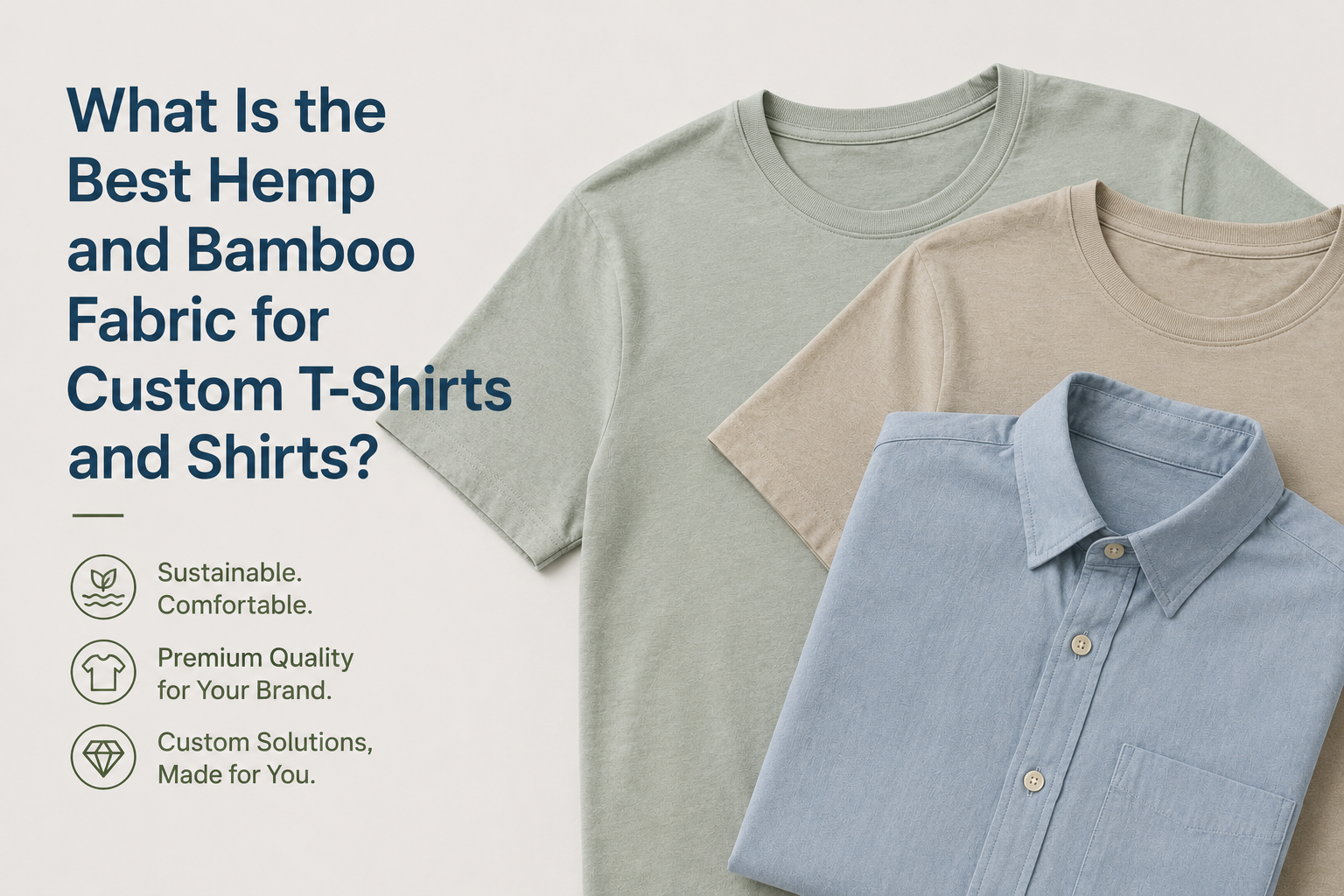
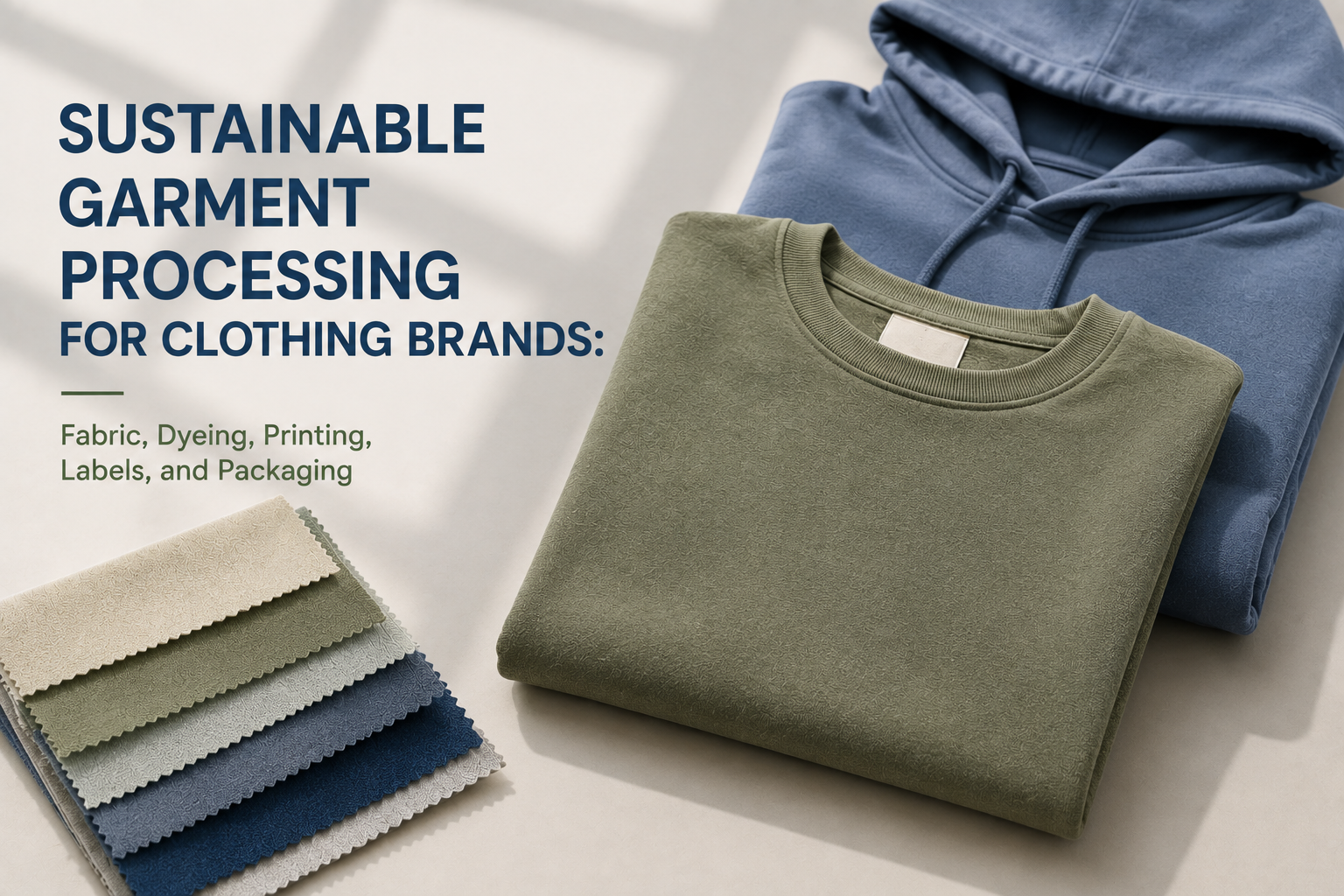
Sustainable garment processing is not only about using an eco-friendly fabric. It also includes fabric sourcing, dyeing, cutting, sewing, washing, finishing, printing, embroidery, labels, packaging, quality control, and supplier documentation. Every stage affects the final garment’s quality, durability, environmental claims, and readiness for retail.
Sustainable garment processing covers the steps used to turn fabric into finished apparel. It includes fabric sourcing, dyeing, cutting, sewing, washing or finishing, decoration, labeling, packaging, quality control, and documentation. For clothing brands, a responsible process should support stable quality, durable products, suitable material choices, and transparent claims. Brands should check material information, processing methods, sample performance, production quality, and supplier documents before describing a garment as sustainable. Choosing organic cotton, hemp, or another lower-impact material is only the beginning.
This guide explains each stage of sustainable garment processing from a manufacturer’s point of view, helping brands ask better questions before sampling or bulk production.
What Does Sustainable Garment Processing Mean?
Sustainable garment processing means managing the journey from fabric sourcing to finished apparel with attention to quality, durability, lower-impact choices, production control, and transparent product claims.
The garment production process includes much more than sewing pieces of fabric together.
A complete process may involve:
- fabric selection
- yarn or fabric sourcing
- dyeing
- cutting
- sewing
- garment washing
- softening or finishing
- printing
- embroidery
- labels
- packaging
- quality control
- production records
- shipping preparation
Each step can affect the final product.
A brand may choose organic cotton, hemp, bamboo-derived fabric, Tencel, modal, linen, or a recycled blend. However, the final garment can still have problems if its dyeing is unstable, shrinkage is not controlled, the stitching is weak, or the sustainability language is not supported by documents.
This is why sustainable garment processing is not only a marketing phrase. It is a practical production system.
The broader concept is explained further in what is sustainable garment processing.
For apparel buyers, the main goal should be to connect material choice with real product performance. A fabric should not only sound responsible. It should also work for the product category, survive washing, support the intended decoration, and remain stable during repeat production.
Why Should Brands Check Processing, Not Only Fabric?
Fabric is only one part of a sustainable apparel product. Dyeing, cutting, sewing, finishing, decoration, labels, packaging, and quality control also shape the product’s real impact and performance.
Many brands begin with a material question:
- Should we use organic cotton?
- Is hemp suitable for this T-shirt?
- Should we choose bamboo-derived fabric for loungewear?
- Is Tencel better for a soft shirt?
These are useful questions, but they do not cover the full product.
Poor processing may cause:
- excessive shrinkage
- color fading
- pilling
- twisting seams
- unstable necklines
- uncomfortable stitching
- poor print durability
- incorrect care information
- unnecessary packaging
- unsupported sustainability claims
Good processing can help a garment keep its shape, color, comfort, and appearance for longer. That supports a better customer experience and may reduce complaints, returns, and replacement needs.
For example, an organic cotton sweatshirt may have a strong material story, but it still needs stable dyeing, controlled shrinkage, good rib recovery, and suitable printing. A bamboo-derived lounge top may feel soft in a swatch, but the finished garment still needs pilling, seam, and wash testing.
Fabric choice remains the first step. Brands comparing material options can review best sustainable fabrics for clothing brands.
How Do Fabric Choice and Processing Work Together?
Different fabrics need different processing checks. Brands should match sourcing, dyeing, finishing, sewing, and testing to the behavior of the selected fiber and fabric structure.
No single processing method works equally well for every material.
Organic cotton
Brands should check:
- shrinkage
- dyeing stability
- print compatibility
- hand feel after washing
- certification documents if required
Organic cotton is familiar and versatile, but different jersey, rib, interlock, French terry, and fleece constructions can still behave differently.
Hemp
Hemp fabrics may require attention to:
- natural texture
- softening
- wash behavior
- shrinkage
- seam stability
- final hand feel
Some brands choose hemp blends because pure hemp may feel too dry or structured for soft everyday basics.
Bamboo-derived fabrics
Brands should confirm:
- exact fiber description
- blend composition
- processing claims
- pilling
- shrinkage
- drape
- wash stability
A supplier description using the word “bamboo” is not enough for strong product claims. The exact fiber type and supporting documents should be checked.
For related product planning, see the hemp and bamboo clothing manufacturer guide.
Tencel or lyocell
These fabrics often need checks for:
- drape
- seam appearance
- surface sensitivity
- wash performance
- shrinkage
- finishing
They can work well for premium soft tops, shirts, and loungewear, but the garment structure must suit the fabric’s fluidity.
Modal
Modal products should be checked for:
- softness after washing
- recovery
- pilling
- seam stability
- fit retention
French terry
French terry development should include:
- GSM
- shrinkage
- loop structure
- rib recovery
- outer surface for printing
- fit after washing
Brands developing matching sets can review the French terry lounge set manufacturer guide.
Brushed fleece
Important checks include:
- brushing consistency
- warmth
- pilling
- shedding
- hand feel after washing
- surface stability for decoration
Rib and jersey
These fabrics should be tested for:
- stretch
- recovery
- neckline stability
- twisting
- shrinkage
- sewing performance
The fiber name gives a starting point. The fabric structure and processing determine how the finished garment actually behaves.
What Dyeing and Finishing Questions Should Brands Ask?
Brands should ask how the fabric will be dyed, how color and shrinkage will be controlled, and whether finishing will change the hand feel, measurements, or final appearance.
Dyeing and finishing can strongly affect a garment, even when the base fabric is good.
Before approving production, buyers can ask:
- What dyeing method is suitable for this fabric?
- Can lower-impact dyeing options be discussed if required?
- How stable is the color after washing?
- Is there a color difference risk between batches?
- What shrinkage should the brand expect?
- Does the fabric require softening?
- Will the garment receive an enzyme wash?
- Will the inside be brushed?
- Will finishing change the color?
- Will washing change the measurements?
- Will the final hand feel match the approved sample?
Color should be checked under suitable lighting and against an approved color reference. If the collection includes several pieces in one matching set, color consistency between tops, bottoms, rib, drawcords, and labels also matters.
Finishing processes may improve softness or create a particular appearance, but they can also affect shrinkage and measurements. For example, a washed hemp T-shirt may feel softer than the original fabric swatch, while brushed fleece may feel warmer but require additional pilling checks.
Brands should always review:
- color fastness
- shrinkage
- surface appearance
- hand feel after washing
A fabric swatch shows only part of the result. A finished and washed garment sample gives more useful information.
What Printing and Embroidery Methods Are Suitable for Sustainable Apparel?
Decoration should match the fabric surface, garment use, desired appearance, order quantity, and brand positioning. No printing or embroidery method is automatically the best for every sustainable product.
Common decoration methods include:
Water-based printing
Water-based print can suit:
- soft T-shirts
- natural-feel basics
- lightweight tops
- designs where a softer print hand is preferred
The fabric color, composition, and finishing may affect the result, so testing is still needed.
Screen printing
Screen printing can work for:
- T-shirts
- sweatshirts
- hoodies
- joggers
- larger graphic programs
It is widely used, but the ink system, artwork, color count, and fabric surface should be discussed before sampling.
Digital printing
Digital printing may be useful for:
- detailed artwork
- multiple colors
- smaller development quantities
- complex graphic concepts
Not every fabric gives the same digital print result.
Embroidery
Embroidery can create a more structured or premium appearance on:
- sweatshirts
- hoodies
- joggers
- shirts
- hats
- casual basics
However, dense embroidery may pull or distort lightweight fabric.
Special decoration
Options such as appliqué, puff print, flock print, patches, and mixed techniques can add visual depth. They may also require:
- more sample time
- more stability testing
- additional wash testing
- clearer placement instructions
Decoration should always be tested on the real production fabric, not approved only from artwork on a computer screen.
For sweatshirt fabric and decoration planning, see French Terry sweatshirt vs fleece.
How Do Labels and Packaging Affect Sustainable Garment Processing?
Labels and packaging are part of the finished product. They affect comfort, compliance, brand presentation, material claims, and the amount of packaging used.
Labels may include:
- neck labels
- heat transfer labels
- side seam labels
- hem tags
- care labels
- size labels
- hang tags
- packaging stickers
The right label depends on the product.
For loungewear, pajamas, activewear, and soft T-shirts, comfort is especially important. A stiff neck label can weaken the experience of an otherwise soft garment. Heat transfer labels or softer label materials may be more suitable for close-to-skin products.
Care labels may need to communicate:
- fiber composition
- care instructions
- country of origin
- business identity or other required information
The exact requirements depend on the target market, so brands should confirm their own retail and legal needs.
Packaging options may include:
- reduced packaging
- paper packaging
- recycled-content packaging
- compostable options where suitable and available
- reusable bags
- standard protective bags
No packaging option should be described as automatically sustainable without checking the material, disposal conditions, supplier documents, and target market.
For more detail on label location, see where should labels go in modern apparel.
What Documents Should Brands Ask a Manufacturer For?
Brands should request enough documentation to support product specifications, quality control, retail needs, and any sustainability claims they plan to make.
The exact documents depend on the project, but useful records may include:
- fabric composition
- fabric sourcing information
- certification documents if required
- test reports if available
- color approval records
- shrinkage information
- care label information
- sample approval notes
- print or embroidery sample approval
- size chart
- measurement tolerance
- quality control standard
- packaging details
- production timeline
- shipping information
Certification names alone are not enough. Buyers should check:
- certificate holder
- validity date
- certified scope
- product or material coverage
- issuing organization
- whether the relevant supplier or facility is included
A fabric certificate does not automatically confirm every later garment-processing stage. Similarly, a test report should be checked to understand which material, color, or production batch it covers.
Clear documentation also helps prevent communication problems. When sample comments, measurements, artwork, colors, and packaging requirements are recorded, both the brand and manufacturer have a clearer approval reference.
Not every startup needs a large document package. However, every project needs enough information to confirm what is being produced and what claims can be supported.
What Should Startups Confirm Before Production?
Startup brands should clearly define the product, customer, fabric, fit, branding, quantity, budget, timeline, and shipping destination before production begins.
A useful startup checklist includes:
- product type
- target customer
- reference images
- fabric choice
- GSM
- colors
- size range
- size chart
- logo files
- print or embroidery method
- label type
- care label content
- packaging
- MOQ
- sample timeline
- target launch date
- shipping destination
- budget range
A complete tech pack is helpful, but not every new brand has one at the beginning.
Many startups begin with:
- reference images
- a product description
- target measurements
- fabric preferences
- logo files
- color ideas
- expected quantity
A manufacturer can provide more realistic suggestions when the brand clearly explains what the product should look and feel like.
For example, “a premium hoodie” is still too broad. A stronger request would explain:
- pullover or zip style
- regular or oversized fit
- French terry or fleece
- target GSM
- intended season
- print or embroidery
- target quantity
- launch date
Startup brands planning comfort apparel can also read how to start a sustainable loungewear brand.
What Common Processing Mistakes Can Delay Production?
Most delays come from unclear decisions, late changes, incomplete approvals, and skipping real garment testing.
Common mistakes include:
- choosing fabric only by fiber name
- ignoring shrinkage testing
- making unsupported bamboo or sustainability claims
- changing color after sample approval
- changing the printing method too late
- delaying labels or packaging
- not checking care label content
- not confirming size tolerance
- approving a swatch without a finished sample
- adding too many SKUs to the first order
- not allowing enough time for sample revision
Late decisions create connected delays.
For example, delaying the label choice may affect label sampling, care content, stitching, packaging, and the pre-production sample. Changing the print method may require new artwork preparation, new testing, and revised costing.
Another common mistake is approving the first sample only by appearance. Brands should also check:
- measurements
- post-wash fit
- seam quality
- shrinkage
- color
- print durability
- label comfort
- packaging accuracy
Sustainable apparel development needs both better material choices and practical production control.
How Can Sustainable Garment Processing Support Brand Storytelling?
Strong sustainability storytelling comes from real product decisions, transparent information, and documented processes rather than broad environmental language.
A brand may explain why it chose:
- hemp for natural texture and durability
- organic cotton for familiar everyday comfort
- bamboo-derived fabric for softness, with accurate fiber wording
- Tencel or lyocell for smooth drape
- French terry for breathable comfort
- modal for soft loungewear
It may also discuss:
- wash performance
- garment durability
- lower-impact packaging options
- careful sample development
- production planning
- quality control
- product care
However, every claim should match the available evidence.
Useful support may include:
- exact fabric composition
- certification documents
- supplier information
- care labels
- test results
- production records
- clear product descriptions
Transparent wording is often stronger than exaggerated wording. Saying exactly what the fabric is and how the product was tested creates a more reliable brand story.
For further guidance, see communicate your brand’s sustainability.
How Can Hempspring Support Sustainable Garment Processing?
Hempspring can support brands across fabric sourcing, sampling, processing coordination, decoration, labels, packaging, quality control, and OEM/ODM apparel production.
Material directions may include:
- organic cotton
- hemp
- bamboo-derived fabrics
- Tencel
- modal
- linen
- French terry
- brushed fleece
- jersey
- rib
- blended fabrics
Development support may include:
- fabric sourcing
- fabric-weight suggestions
- sample development
- fit adjustment
- dyeing and finishing coordination
- print testing
- embroidery testing
- custom labels
- hang tags
- custom packaging
- quality control support
- OEM/ODM production planning
This may be useful for:
- startups building their first custom collection
- growing brands expanding product categories
- mature brands looking for a second supplier
- overseas buyers in the US, Australia, Europe, the Middle East, and South America
The practical starting point is to share the product type, reference images, target fabric, expected hand feel, size range, branding requirements, quantity, market, and launch date.
The goal is not to describe every process as sustainable. It is to help brands understand the available options, confirm their requirements, test the product, and make claims that match the real garment and supporting information.
Conclusion
Sustainable garment processing is more than choosing a sustainable fabric. Brands should check fabric sourcing, dyeing, finishing, cutting, sewing, printing, labels, packaging, quality control, documentation, and sample performance. Each decision affects the final garment’s comfort, durability, consistency, and product claims. Brands planning custom sustainable apparel can share their product ideas, preferred fabric, target market, branding requirements, and launch schedule to make the sourcing and sampling process clearer.