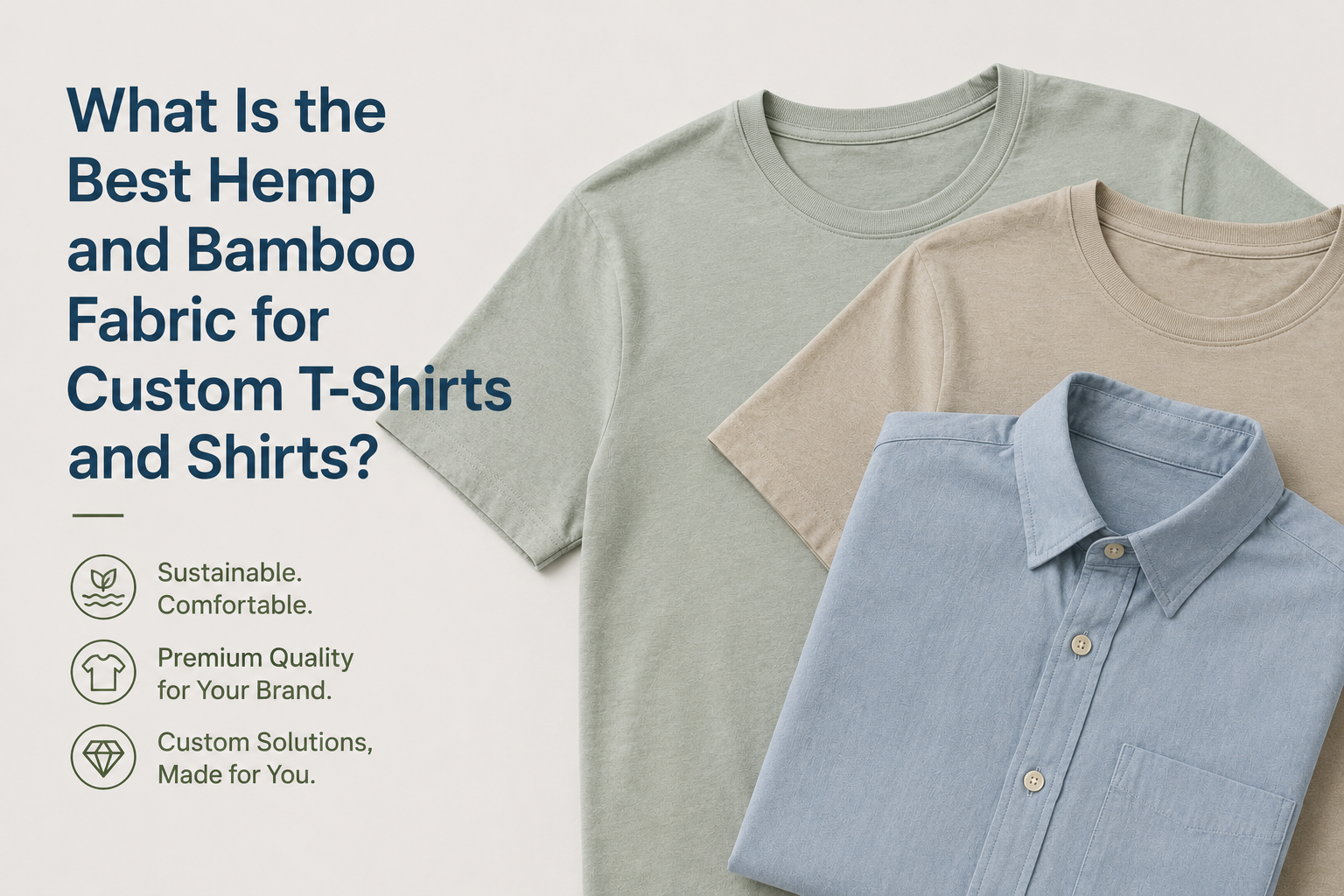
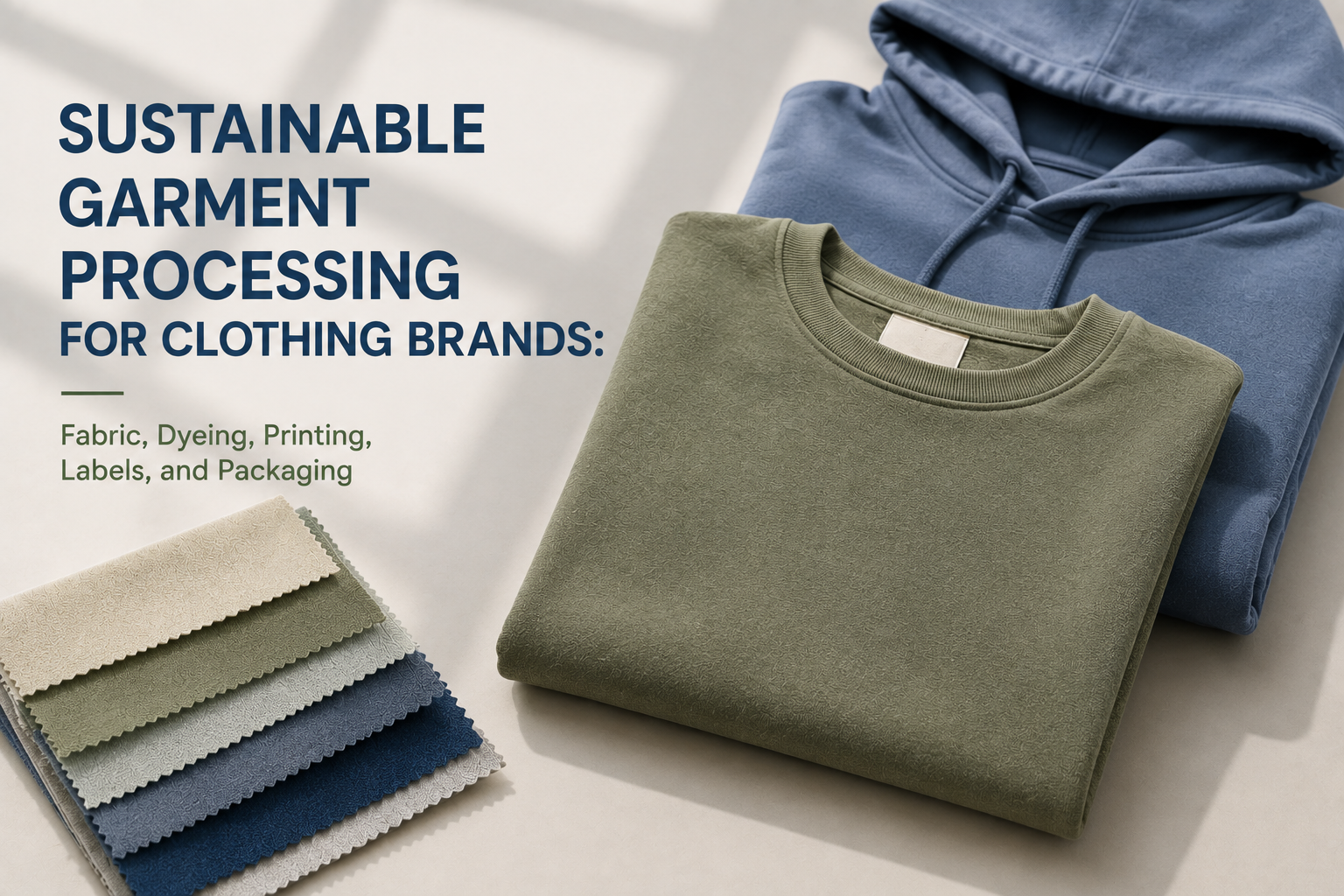
Hemp and bamboo fabrics are popular choices for sustainable adult basics, but brands should not select them by fiber name alone. The right option depends on product type, target hand feel, GSM, shrinkage, production stability, decoration needs, and target market. A blend that works well for a relaxed T-shirt may not be suitable for a structured casual shirt or a repeat-order premium basics program.
Hemp cotton and hemp bamboo cotton blends are often practical choices for commercial T-shirts and shirts. Hemp can add natural texture and durability, while bamboo-derived fibers may improve softness and drape. Cotton can add structure, stability, and everyday wearability. However, the best fabric still depends on composition, GSM, knit or woven construction, shrinkage, finishing, and sample performance. Brands should also confirm whether the bamboo component is viscose, rayon, lyocell, or another bamboo-derived fiber before writing care labels or product claims.
This guide compares hemp, bamboo-derived fabrics, hemp cotton, bamboo cotton, and hemp bamboo cotton blends for custom adult basics.
What Does Hemp and Bamboo Fabric Mean in Apparel Sourcing?
Hemp and bamboo fabric is not one fixed material. It can describe several single-fiber fabrics and blends with very different structures, hand feels, costs, and production performance.
Hemp may be used alone or blended with:
- organic or conventional cotton
- bamboo-derived fibers
- Tencel or generic lyocell
- modal
- spandex
The word “bamboo” can also describe several different materials in apparel sourcing, such as:
- viscose made from bamboo
- rayon made from bamboo
- bamboo lyocell
- mechanically processed bamboo fiber
- a blend containing a bamboo-derived fiber
These names should not be treated as interchangeable.
For brands selling in the United States, the Federal Trade Commission explains that rayon or viscose produced from bamboo should not simply be labeled as “bamboo.” Accurate descriptions may include “rayon made from bamboo” or “viscose made from bamboo,” depending on the real fiber.
Brands should therefore confirm:
- the generic fiber name
- the full composition percentage
- the supplier’s fiber documents
- the processing method where relevant
- care-label wording
- marketing claim requirements in the target market
The same composition can also be made into different structures. A hemp bamboo jersey may suit a soft T-shirt, while a woven hemp bamboo fabric may work better for a resort shirt.
Brands often begin by comparing a hemp bamboo shirt before deciding whether cotton should be added for more structure and repeat-production stability.
Is Hemp Bamboo Fabric Good for Custom T-Shirts?
Hemp bamboo fabric can work well for custom T-shirts when its softness, weight, shrinkage, recovery, neckline stability, and wash performance match the brand’s product target.
Hemp and bamboo-derived fibers can complement each other in a T-shirt fabric.
Hemp may contribute:
- natural texture
- a dry hand feel
- durability
- a less generic fabric appearance
Bamboo-derived fibers may contribute:
- softness
- smoother drape
- fluid movement
- comfort against the skin
This can create a distinctive premium T-shirt. However, not every hemp bamboo fabric behaves the same way.
Depending on the yarn, blend ratio, and knitting structure, the fabric may feel:
- very soft but too fluid
- natural but too textured
- comfortable but less stable at the neckline
- attractive in a swatch but different after washing
T-shirts need more than softness. A commercial adult basic should also have:
- stable neck rib
- controlled shrinkage
- limited side-seam twisting
- suitable opacity
- good print compatibility
- consistent hand feel after washing
- reliable performance across repeat orders
For this reason, many brands prefer a blended material instead of an unusual single-fiber fabric. A commercially successful basic needs to be reproducible, not only interesting during the first sample round.
A hemp bamboo fabric may be a good choice when the brand wants a softer natural story. But it should be tested as a finished garment before a bulk order is approved.
Is Hemp Bamboo Cotton Better for Commercial Basics?
Hemp bamboo cotton fabric is often more practical for commercial adult basics because cotton can balance softness, texture, structure, cost, and production stability.
Adding cotton can make a hemp and bamboo-related fabric easier to use across a wider product range.
Cotton may help improve:
- fabric body
- neckline stability
- sewing control
- size consistency
- printing performance
- dyeing familiarity
- wash behavior
- everyday wearability
This makes hemp bamboo cotton blends suitable for:
- regular T-shirts
- long sleeve T-shirts
- Henley shirts
- premium casual tops
- relaxed-fit basics
- some lightweight woven shirts
From a manufacturing point of view, the blend can be easier to repeat than a more experimental hemp bamboo fabric. Cotton is familiar to knitting, dyeing, sewing, and printing processes, although the finished fabric still needs real testing.
The exact blend ratio matters.
A bamboo-rich blend may feel softer and more fluid. A hemp-rich blend may feel drier and more textured. A cotton-rich blend may feel more familiar and structured.
The final result also depends on:
- yarn quality
- GSM
- jersey, interlock, rib, or woven structure
- finishing
- washing
- shrinkage control
For a more detailed discussion of this direction, see hemp bamboo cotton shirts.
Hemp vs Bamboo Shirts: Which Should Brands Choose?
Hemp suits brands that want texture and durability, while bamboo-derived fabrics suit softer and more fluid products. Blends are often more practical for commercial adult basics.
| Fabric direction | Hand feel | Texture | Drape | Durability | Production stability | Best product type | Points to check |
|---|---|---|---|---|---|---|---|
| Hemp fabric | Dry and natural | High | Low to medium | High | Medium | Structured tees, casual shirts, resort shirts | Softness, shrinkage, sewing stability |
| Bamboo-derived fabric | Soft and smooth | Low | High | Medium | Medium | Soft tops, lightweight tees, relaxed basics | Exact fiber name, pilling, shrinkage, claims |
| Hemp cotton fabric | Balanced and structured | Medium to high | Medium | High | High | T-shirts, long sleeves, casual basics | Blend ratio, wash feel, color stability |
| Bamboo cotton fabric | Soft and familiar | Low | Medium to high | Medium | High | Soft T-shirts, tanks, comfort tops | Recovery, pilling, fiber wording |
| Hemp bamboo cotton fabric | Soft with natural character | Medium | Medium to high | Medium to high | Medium to high | Premium basics, Henleys, relaxed tops | Composition, GSM, shrinkage, repeatability |
| Hemp Tencel or hemp modal blend | Smooth with natural texture | Medium | High | Medium | Medium | Premium shirts, drapey tops, elevated basics | Source, seam stability, wash performance |
Hemp fabric
Hemp is strong for natural texture and durability. It can give a product a more distinctive surface than standard cotton. However, 100% hemp may feel too firm or dry for some T-shirt brands unless the finishing creates the desired softness.
Bamboo-derived fabric
Bamboo-derived fabrics may be useful for softness and drape. However, brands must verify the exact generic fiber name and avoid unsupported sustainability or performance claims.
Hemp cotton
Hemp cotton is often practical for T-shirts and casual basics. It can balance hemp’s texture with cotton’s familiarity and structure.
Bamboo cotton
Bamboo cotton can work well for smooth, soft comfort tops. It may be easier to position for customers who expect a familiar T-shirt feel with more drape.
Hemp bamboo cotton
This is often a balanced option for premium basics because it can combine texture, softness, and stability. The right result depends heavily on the actual ratio and fabric construction.
Hemp Tencel or modal blends
These blends may suit softer, more drapey shirts. They can create a premium appearance, but seam quality and wash behavior require careful testing.
No brand should choose only by the fiber name. The correct fabric should match the product, price level, market, and production plan.
For a broader comparison, see best sustainable fabrics for clothing brands.
What GSM Should Brands Choose for Hemp and Bamboo T-Shirts?
Most commercial hemp and bamboo-related T-shirts use lightweight to midweight fabrics, but the correct GSM depends on season, opacity, silhouette, hand feel, and market positioning.
GSM affects:
- garment weight
- drape
- opacity
- warmth
- perceived quality
- printing support
- shipping cost
- season
A simple reference is:
| GSM Range | Suitable Products |
|---|---|
| 160–190 GSM | Lightweight summer T-shirts, warm-market tops, resort T-shirts |
| 200–240 GSM | Regular T-shirts, long sleeve T-shirts, Henley shirts, premium basics |
| 240–280 GSM | Heavier long sleeve tops, structured T-shirts, premium casualwear |
| 280+ GSM | Structured tops or sweatshirt-like basics when specifically required |
A lightweight hemp bamboo T-shirt may feel breathable and fluid. However, it may also feel too thin for a brand positioned around substantial premium basics.
A 200–240 GSM fabric is often a more practical starting point for regular adult T-shirts, long sleeve tops, and Henleys. It provides more body while remaining wearable across multiple seasons.
Heavier fabrics can work for:
- relaxed oversized T-shirts
- structured long sleeves
- autumn layering
- premium casualwear
But high GSM is not automatically better. A heavy fabric can reduce drape, increase shipping cost, and feel unsuitable for warm regions.
GSM should always be reviewed together with:
- fiber composition
- yarn count
- knitting structure
- washing and finishing
- target fit
For more detail, see GSM for long sleeve T-shirts, crewneck sweatshirts, and joggers.
Which Products Can Brands Develop First With Hemp and Bamboo Fabrics?
Startup brands should normally begin with one to three focused adult basics that are easy to sample, photograph, test, and reorder.
Suitable first products include:
- short sleeve T-shirts
- long sleeve T-shirts
- Henley shirts
- casual woven shirts
- resort shirts
- relaxed tops
- tank tops
- lightweight overshirts
- premium everyday basics
- soft lounge tops for everyday comfort collections
T-shirts
A T-shirt is often the easiest starting product. It allows the brand to test:
- hand feel
- neckline stability
- shrinkage
- color
- fit
- decoration
Long sleeve T-shirts
A long sleeve version works well for transitional collections and provides a useful extension from a short sleeve basic.
Henley shirts
A Henley can create a more developed product identity without requiring a highly complicated construction. The brand should check placket structure, button choice, neckline stability, and fabric recovery.
See the hemp bamboo long sleeve Henley T-shirt for a relevant product direction.
Casual and resort shirts
Woven hemp, hemp cotton, linen-hemp, or hemp bamboo cotton fabrics may work for relaxed casual or warm-market shirts. Drape, wrinkles, softness, and seam stability should be reviewed.
Tanks and lightweight tops
Soft bamboo cotton or hemp bamboo cotton jersey can work for tanks and lightweight basics, especially when recovery and opacity are stable.
Brands comparing a more structured everyday tee can also review the hemp cotton T-shirt.
A focused first range reduces development risk. Three well-connected products are often more useful than ten styles using unrelated fabrics, fits, and color directions.
What Should Brands Confirm Before Sampling Hemp and Bamboo T-Shirts or Shirts?
Brands should confirm the exact composition, structure, weight, performance targets, decoration, labeling, quantity, and timeline before the first sample is made.
Use this checklist:
- exact fiber composition
- bamboo fiber type
- whether bamboo is viscose, rayon, lyocell, or another bamboo-derived fiber
- GSM
- knit or woven structure
- yarn count if available
- shrinkage rate
- color fastness
- hand feel after washing
- pilling
- stretch and recovery
- neckline stability
- side-seam twisting
- print or embroidery compatibility
- label placement
- care-label wording
- certification documents if required
- MOQ
- sample time
- bulk production timeline
- target launch date
A fabric swatch is useful, but it does not show the complete garment result.
A finished and washed sample provides more information about:
- real shrinkage
- fit
- drape
- seam quality
- neckline stability
- side-seam control
- print result
- final appearance
Brands should also compare fabric performance against the target market. A light, fluid T-shirt may suit Australia or the Middle East, while a denser midweight long sleeve may be more suitable for European or North American transitional seasons.
Sourcing uncommon compositions, custom-dyed fabric, specific certification, or multiple sample rounds may also increase the timeline. See hemp, bamboo, and organic cotton production lead times for further planning guidance.
Can Hemp and Bamboo Fabrics Support Printing, Embroidery, and Labels?
Hemp and bamboo-related fabrics can support printing, embroidery, and private-label details, but decoration should be tested on the real fabric before bulk production.
A smoother outer surface is normally easier for detailed printing. A textured hemp-rich surface may require artwork or ink adjustments.
Suitable decoration options can include:
- screen print
- water-based print
- digital print
- small chest embroidery
- tonal embroidery
Printing
Screen printing can work for many T-shirts, but the final result depends on the fabric texture, color, and finishing.
Water-based printing can support a softer design direction on natural-feel basics, although the fabric and ink should still be tested together.
Digital printing may suit detailed or multi-color artwork, but not every blended fabric produces the same result.
Embroidery
Small chest embroidery can work on T-shirts, Henleys, and casual tops when the fabric has enough weight and stability. Very lightweight or fluid fabric may distort under dense stitching.
Labels and packaging
Branding options may include:
- hem tags
- heat transfer neck labels
- woven neck labels
- side seam labels
- care labels
- hang tags
- custom packaging
Heat transfer labels can support soft, comfort-focused products. Woven labels can provide a stronger branded look, but material and placement should not create skin irritation.
For label-position planning, read where should labels go in modern apparel.
How Can Brands Avoid Unsupported Hemp and Bamboo Fabric Claims?
Brands should use accurate fiber names, verify supplier information, and keep product-page, packaging, hang-tag, and care-label language consistent.
Bamboo-related wording needs particular care.
For products sold in the United States, FTC guidance states that textiles made from rayon or viscose using bamboo as the source should not simply be called bamboo unless the finished fiber is genuinely bamboo fiber.
An appropriate description may be:
- rayon made from bamboo
- viscose made from bamboo
The correct wording depends on the actual fiber.
Brands can review the FTC’s official guidance here:
Hemp also supports a useful natural texture and durability story, but brands should avoid assuming that every hemp fabric has the same sourcing or processing impact.
For stronger sustainability claims, brands should request relevant information such as:
- fiber composition
- fiber source
- processing information
- dyeing details
- certification documents
- supplier declarations
- available test reports
The same wording should be used consistently across:
- product pages
- hang tags
- care labels
- packaging
- advertising
- distributor materials
Accurate language helps protect brand trust and reduces compliance risk. A specific, documented claim is more useful than broad wording such as “100% eco-friendly.”
How Can Hempspring Help Brands Develop Custom Hemp and Bamboo T-Shirts and Shirts?
Hempspring can support brands with fabric sourcing, weight selection, sampling, fit development, decoration, labels, packaging, and OEM/ODM production for adult basics.
Available material directions may include:
- hemp
- organic cotton
- bamboo-derived fabrics
- Tencel or lyocell
- modal
- linen
- blended fabrics
Product-development categories can include:
- T-shirts
- long sleeve tops
- Henley shirts
- casual shirts
- resort shirts
- tank tops
- lightweight overshirts
- premium basics
Support may include:
- fabric sourcing
- GSM suggestions
- sample development
- fit adjustment
- print and embroidery testing
- custom neck labels
- hem tags
- care labels
- hang tags
- custom packaging
- OEM/ODM production planning
At Taian Lianchuang Textile Co., Ltd., fabric recommendations are normally based on the product type, target hand feel, expected price level, season, and production needs rather than promoting one fiber as the best answer for every collection.
This can support:
- startup brands developing their first basics range
- growing brands adding more sustainable material options
- mature apparel brands looking for a second supplier
- overseas buyers in the US, Australia, Europe, the Middle East, and South America
A useful first inquiry should include:
- product reference images
- preferred fabric composition
- target GSM
- size range
- expected quantity
- decoration details
- target launch date
- shipping destination
Clear information makes the first sampling discussion more useful and reduces unnecessary revisions.
Conclusion
The best hemp and bamboo fabric for custom T-shirts and shirts depends on product type, composition, GSM, hand feel, shrinkage, claim requirements, and finished-sample testing. Hemp cotton and hemp bamboo cotton blends are often practical for commercial adult basics because they can balance texture, softness, and stability. Brands should confirm the exact bamboo-derived fiber name and test a washed garment before bulk production. Reference images, target hand feel, GSM preferences, product plans, quantities, and launch timing can help a manufacturer recommend a more suitable development direction.