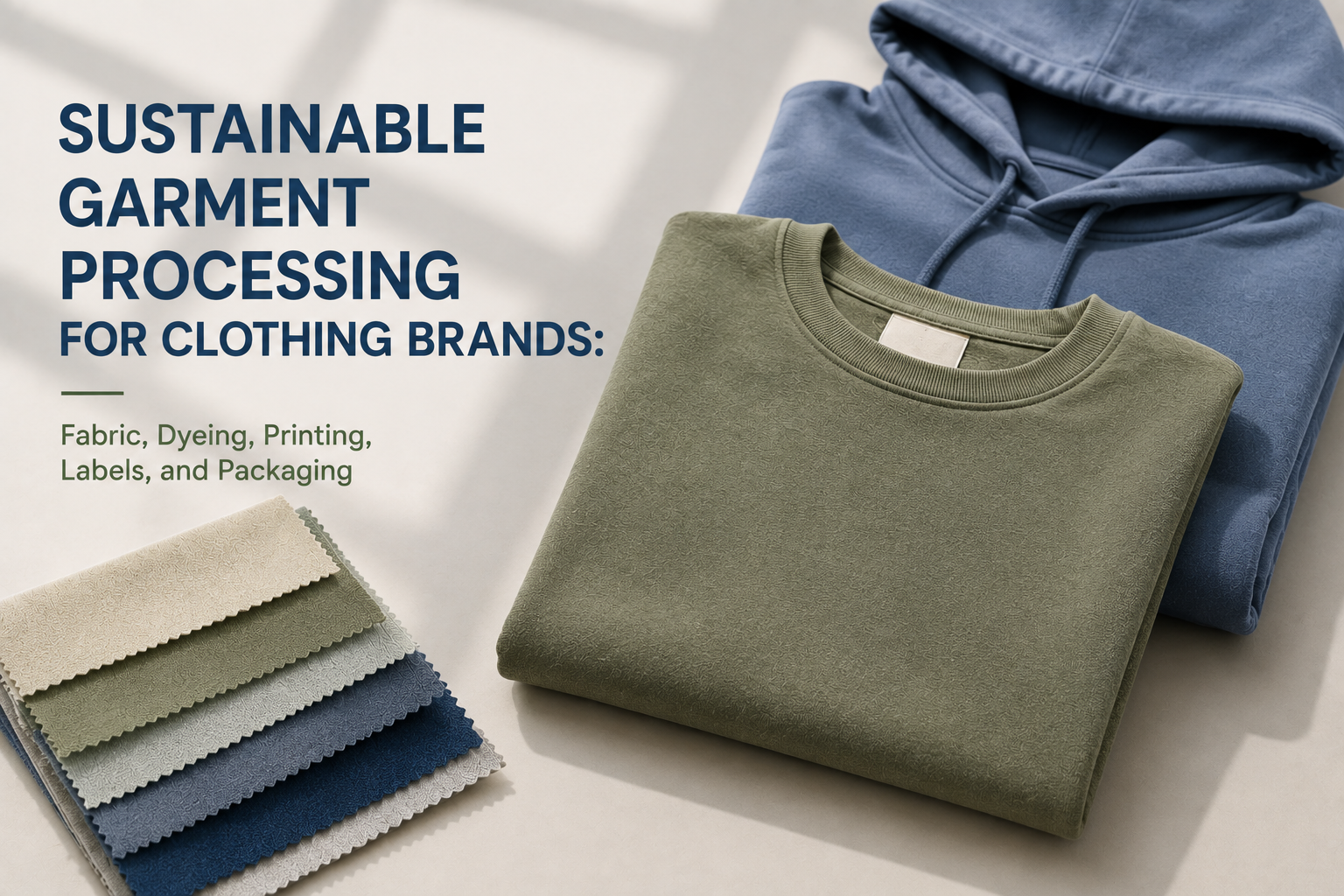
Fall/Winter basics are not just simple products. Brands need to plan fabric weight, fit, color, sampling, and production timing early if they want the final collection to feel consistent, commercial, and ready for the market. A strong basics program usually comes from clear decisions, not from adding too many styles.
A clothing brand can build a sustainable Fall/Winter basics collection by starting with a focused capsule range, choosing fabrics that match each product type, confirming GSM by season and market, narrowing the color direction, and planning sampling and production early. Long sleeve T-shirts, sweatshirts, hoodies, joggers, and lounge basics need different fabric structures and different levels of weight. For most brands, the safest path is to keep the collection tight, confirm fit and color before bulk, and leave enough time for heavier fabrics, labels, packaging, QC, and shipping.
This guide covers product selection, fabric choice, GSM, colors, sampling, and manufacturing timeline for sustainable Fall/Winter basics development.
What Products Should Be Included in a Fall/Winter Basics Collection?
Short answer: the strongest Fall/Winter basics collections usually start with a small capsule of connected products, not too many disconnected styles.
When a brand is planning a cold-weather range, the first mistake is often trying to add too many product ideas at once. That usually creates more sampling, more fit problems, and weaker product focus.
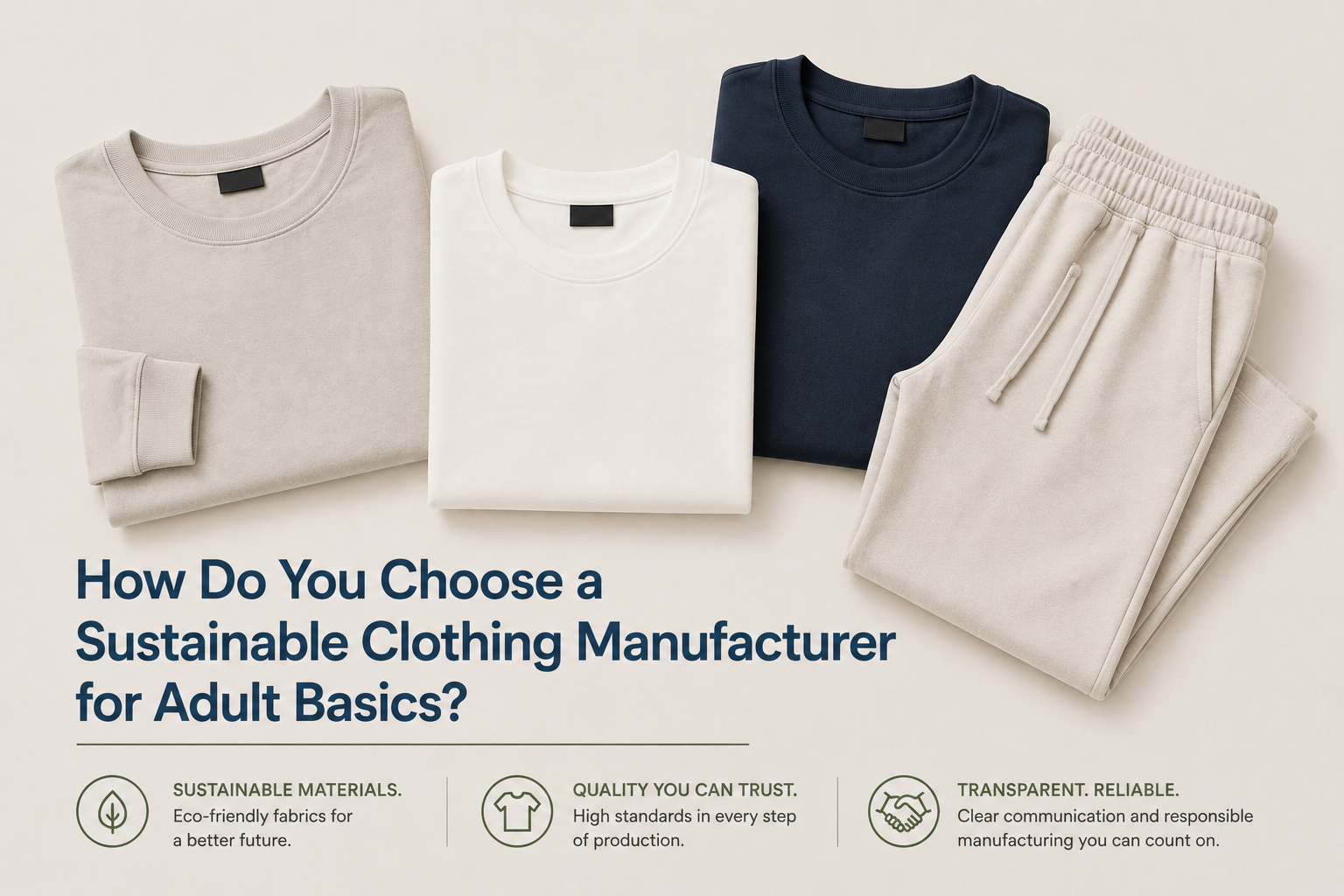
A practical Fall/Winter basics capsule can include:
- long sleeve T-shirts
- heavyweight T-shirts
- crewneck sweatshirts
- pullover hoodies
- zip hoodies
- joggers
- lounge pants
- layering tanks
- thermal tops if suitable
This product mix works because the styles support each other. A customer who likes the hoodie may also buy the jogger. A brand that develops a strong crewneck can often extend the same fabric direction into sweatpants or lounge tops.
From a manufacturer’s point of view, a capsule structure is easier to sample, easier to merchandise, and easier to repeat in bulk. It also helps brands create a clearer visual story and a more stable cost structure.
A good basics collection should feel like one family. The garments do not need to be identical, but they should share a logic in fabric, fit, color, and branding.
Which Fabrics Work Best for Sustainable Fall/Winter Basics?
Short answer: the best fabric depends on the product type, target climate, and hand feel the brand wants to create.
Not every cold-weather basic needs the same fabric. A long sleeve T-shirt should not be planned the same way as a hoodie or jogger. That is why fabric-to-product matching matters.
Here is a practical breakdown:
Long sleeve T-shirts
- organic cotton jersey
- hemp cotton jersey
- bamboo cotton jersey
- rib
- interlock
These are usually better for lighter to midweight tops, depending on the final season target.
Sweatshirts
- French terry
- brushed fleece
French terry usually works well for transitional or cleaner-looking sweatshirts. Brushed fleece is often stronger for warmer Fall/Winter products. This page is useful when comparing the two: French Terry vs Brushed Fleece.
Hoodies
- brushed fleece
- heavier French terry
Hoodies usually need more structure and warmth, so fabric choice affects both comfort and perceived quality.
Joggers
- French terry
- fleece
- heavy jersey
Joggers should feel stable enough to hold shape, but still comfortable enough for repeated wear.
Lounge tops
- bamboo blends
- cotton modal blends
- Tencel blends
These are useful when the brand wants a softer and more fluid product for comfort-led basics.
Natural fiber comparison also matters here. If your brand is still balancing hemp and cotton directions, this page helps: organic cotton vs hemp clothing.
The key point is simple: fabrics should be chosen by product use, not only by sustainability language. A sustainable collection still needs to feel right, wear well, and make sense in production.
What GSM Should Brands Choose for Fall and Winter Products?
Short answer: GSM should be chosen by product type, climate, target market, and the hand feel the brand wants, not by one “premium” number.
GSM is one of the most important practical decisions in Fall/Winter development. It affects warmth, drape, weight, structure, and the way the garment is perceived by buyers and end customers.
A useful reference table looks like this:
| Product | Fall Direction | Winter Direction |
|---|---|---|
| Long sleeve T-shirt | light to midweight | midweight to heavyweight |
| Crewneck sweatshirt | medium | medium to heavy |
| Hoodie | medium | medium to heavy |
| Jogger | medium | medium to heavy |
| Loungewear | soft midweight | soft midweight to slightly heavier |
This table is only a guide. The correct weight still depends on:
- climate
- product category
- fabric structure
- composition
- brand positioning
- target customer expectation
For example, a heavyweight long sleeve jersey can feel premium in one market, but too dense in another. A fleece hoodie can feel warm enough for one collection, while another may need a heavier and more structured version.
If you want a more detailed product-by-product view, this page connects naturally here: what GSM should a long sleeve T-shirt, crewneck sweatshirt, and jogger be for fall vs winter.
From a manufacturer’s point of view, GSM should never be approved alone. It should be approved together with hand feel, shrinkage, composition, and product function.
How Should Brands Choose Colors for a Sustainable Fall/Winter Collection?
Short answer: many sustainable brands perform better with earthy, seasonless, and easy-to-repeat colors than with too many experimental shades.
Color planning affects both design and risk control. A good Fall/Winter palette should feel seasonal, but also flexible enough to reorder or extend.
Useful color directions include:
- oat beige
- hemp brown
- camel
- washed black
- charcoal
- olive
- clay
- cinnamon
- deep plum
- dark navy
These color groups often work well for sustainable basics because they fit natural fabric positioning and usually feel more stable across multiple product categories.
There is also a practical reason for this.
Brands that choose earthy or seasonless colors often reduce overproduction risk. The products are easier to merchandise, easier to photograph together, and easier to carry into the next reorder or season.
This does not mean every collection should look muted. It means the core range often becomes stronger when color is disciplined.
In production, fewer color directions usually mean:
- easier bulk planning
- clearer range presentation
- smoother packaging coordination
- lower approval complexity
That can make a big difference for startup brands and buyers developing private label basics.
When Should Brands Start Sampling and Production?
Short answer: brands should start earlier than they think, especially for heavier fabrics, special colors, brushed fleece, custom labels, and packaging.
A practical timeline often looks like this:
- concept and fabric sourcing
- first sample
- sample revision
- pre-production sample
- bulk order
- QC
- shipping
- photo shooting
- launch
Fall/Winter products usually need more preparation time than lighter summer basics. Heavier fabrics, fleece finishing, color approvals, rib matching, and packaging details can all add time.
That is why I usually suggest planning early if the collection includes:
- brushed fleece
- heavyweight French terry
- custom-dyed fabric
- multiple labels
- embroidery
- custom packaging
This is also why seasonal calendar planning matters. This page helps explain that broader timing logic: when should apparel brands place bulk orders for each season.
If the brand is working across northern and southern hemisphere markets, it may also help to compare timing logic with when should Australian brands start ordering T-shirts, tanks, and shorts, especially when the business is managing different seasonal calendars.
What Details Should Brands Confirm Before Bulk Production?
Short answer: brands should confirm all major technical and branding details before bulk, not after production starts.
A strong pre-bulk checklist includes:
- fabric composition
- GSM
- shrinkage
- color
- fit
- size chart
- rib quality
- print or embroidery method
- label placement
- packaging
- care label
- production quantity
- shipping plan
This step is where many basics collections become either stable or risky.
A sweatshirt can look simple, but if the rib quality is wrong, the fit can feel weak. A hoodie can have the right fabric but still disappoint if the label placement, shrinkage, or print method is not tested properly.
Label position should also be confirmed early, especially for products that need clean branding or low irritation. This internal page is useful when discussing that point: where should labels go in modern apparel.
From a manufacturer’s point of view, basics succeed because details are controlled. The simpler the garment looks, the more those details matter.
How Can Hempspring Support Fall/Winter Basics Development?
Short answer: Hempspring can support brands that need practical, repeatable development for sustainable cold-weather basics.
Hempspring is a B2B custom clothing manufacturer based in China. We support overseas brands that are developing sustainable apparel collections, including:
- T-shirts
- sweatshirts
- hoodies
- joggers
- loungewear
- seasonal basics
Support can include:
- organic cotton, hemp, bamboo, modal, Tencel and blends
- fabric sourcing
- sample development
- custom fit
- custom colors
- print, embroidery, labels, packaging
- OEM/ODM production
- support for overseas brands
For Fall/Winter basics, this usually means helping brands align product type, fabric, GSM, fit, trims, labels, and timeline before bulk decisions become too costly.
The goal is not to make the collection complicated. It is to make the collection commercially clear, consistent, and easier to scale.
Conclusion
A strong Fall/Winter basics collection depends on practical product planning, fabric weight, sampling, and production timing. Long sleeve T-shirts, sweatshirts, hoodies, and joggers may look simple, but they need careful decisions in fabric, fit, color, labels, and bulk planning. If you already have product ideas or reference images, feel free to share them. Early development support can make a sustainable basics collection much easier to build.