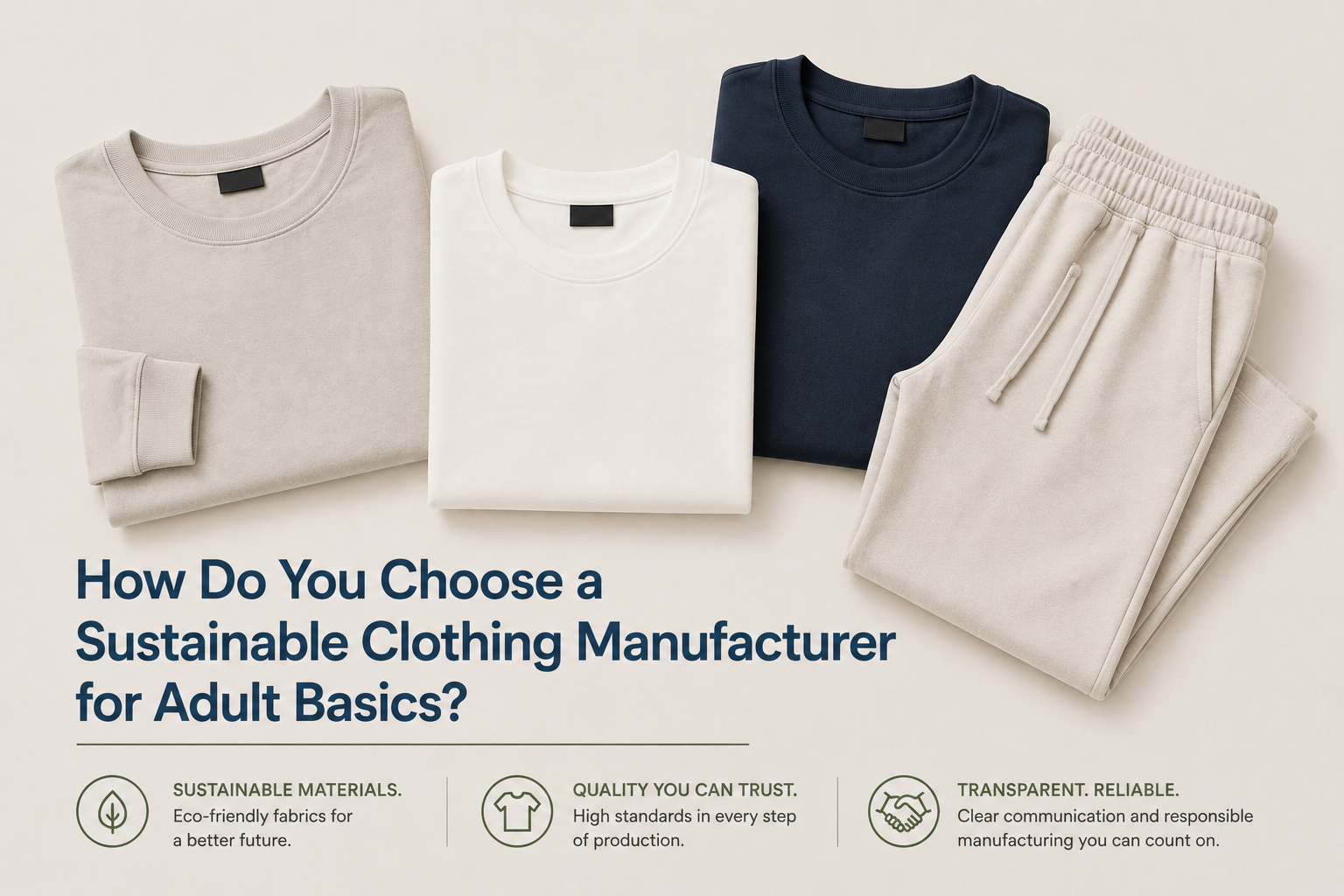
Choosing a sustainable clothing manufacturer sounds easy when you read a polished website. In real life, it is rarely that simple. I have seen brands get excited by low pricing, green words, and quick promises, only to lose time and money later because the factory could not deliver stable quality.
brands should check five things first: quality control, certification transparency, communication speed, production stability, and real material knowledge. A factory can say the right things about sustainability, but if it cannot explain its process clearly or repeat quality in bulk production, it is not a reliable manufacturing partner.
The hard truth? A good-looking supplier profile is not the same thing as a good long-term factory relationship. Let’s break this down in a practical way.
Why is price alone a poor way to compare clothing manufacturers?
Price is usually the first thing brands compare. I understand why. Budgets are real. New collections are expensive. Every dollar matters.
But in manufacturing, the cheapest quote often hides the most expensive problems.
A low unit price can quickly become meaningless if the factory creates delays, sends unstable samples, makes poor trim choices, or cannot keep sizing consistent in bulk. Those problems cost more than a slightly higher quote ever would.
This is why I always tell brands to compare total production risk, not just the first number in the quotation sheet.
A stronger comparison usually includes:
- quality control system
- communication clarity
- sample revision process
- lead time realism
- certification transparency
- material knowledge
Here is a simple way to think about it:
| What you compare | Weak factory signal | Strong factory signal |
|---|---|---|
| Price | Very low, but vague details | Fair price with clear scope |
| Communication | Slow or generic replies | Specific and fast replies |
| Sampling | Promises “no problem” | Explains risk and testing |
| Quality control | No clear process | Gives inspection steps |
| Sustainability | Uses broad claims only | Explains materials and process |
If a factory only talks about low pricing, I get cautious. Reliable manufacturers usually talk just as much about process as they do about cost.
If you want a broader comparison mindset, this article supports that topic well: Best Clothing Manufacturers in 2026: A Practical Guide for Growing Brands
What certifications should brands actually verify?
Certifications matter, but not in the lazy way many people think.
A logo on a PDF is not enough. A copied certificate screenshot is not enough either. Brands need to verify whether the certification is current, relevant, and connected to the actual production site.
That last part is where many problems start.
A supplier may show a certificate, but if it belongs to another entity, another site, or an expired audit, it does not really reduce risk.
At this stage, I suggest checking:
- certificate name
- issuing body
- validity date
- company name on the document
- factory address on the document
- whether the certificate matches the real production process
At Taian Lianchuang Textile Co., Ltd., we have found that buyers trust the process more when documentation is clear, current, and easy to explain. That sounds obvious, but in real sourcing, it still makes a huge difference.
The goal is not to collect as many logos as possible. The goal is to confirm that the factory’s real process matches what it claims.
This page also connects well here: What Sustainable Garment Processing Really Means for Brands
How can you tell if a factory really understands sustainable garment processing?
This is one of the most important questions, because many suppliers can repeat the phrase “sustainable production,” but fewer can explain what it means in day-to-day work.
A factory that truly understands sustainable garment processing should be able to talk about more than fabric names.
It should be able to explain:
- how waste is reduced during cutting
- how sample mistakes are controlled
- how bulk consistency is checked
- how labels, trims, and packaging are chosen
- how delays are communicated before they become disasters
- how materials behave during washing, shrinking, and wear
That last point matters a lot. Real process knowledge always shows up in details.
For example, if a factory understands hemp or bamboo fabric properly, it should be able to talk about shrinkage behavior, softness changes, testing needs, and how those factors affect sample approval.
If a supplier gives only general marketing language, I usually assume the process understanding is still shallow.
You can also connect this idea to your material decision pages:
- Hemp vs Bamboo Clothing: Pros, Cons & Sustainability Compared
- Organic Cotton vs Hemp Clothing: Which Is More Sustainable in 2026?
What questions should brands ask before approving a sample?
This is the stage where good sourcing becomes real sourcing.
A sample is not just there to see if the product “looks okay.” It should answer whether the factory can execute details, repeat the result, and handle your requirements without confusion.
Here is a practical pre-sample checklist:
Pre-Sampling Manufacturer Checklist
- What fabric shrinkage should we expect?
- What label or trim options are most stable in bulk?
- What are the likely weak points in this construction?
- How many sample revisions are normal for this product?
- What testing should happen before bulk approval?
- What is the realistic timeline from sample approval to bulk shipment?
- Which details should be written clearly in the tech pack?
This is where many brands learn whether the supplier is proactive or reactive.
A strong factory usually warns you about possible issues before you ask. A weak one tends to wait until the problem becomes visible.
If your brand is also building a private label system, this is a useful next read: How to Build a Private Label Clothing Line from Scratch
When does a “good supplier” become a risky one?
This happens more often than people think.
A supplier can look good in the first email stage and still become risky later if:
- replies get slower after the deposit
- sample details are misunderstood repeatedly
- timelines keep changing without warning
- certificates are vague or incomplete
- quality comments are treated casually
- bulk readiness is discussed too early and too confidently
I do not think brands need a “perfect” supplier. That is unrealistic. What they need is a supplier that is clear, stable, and honest about risk.
When a factory answers difficult questions directly, I trust it more. When it avoids detail and only pushes for fast confirmation, I trust it less.
That is why choosing a sustainable clothing manufacturer is not really about finding the one with the nicest website. It is about finding the one that can protect your product, your timeline, and your brand reputation.
If you are already comparing service and execution, you can also guide readers here: Solutions
Final Thoughts
A sustainable clothing manufacturer should not be judged by eco-friendly language alone. Brands should check quality systems, certification clarity, process knowledge, communication habits, and sample discipline before moving forward.
A factory that can answer practical questions clearly is usually a much safer long-term partner than one that only offers a fast quote.