When brand owners email me asking how to find the right factory, I can almost feel their stress through the screen. Delayed shipments, unclear certificates, samples that look nothing like production. I’ve seen it all in 18+ years of manufacturing. If you’re a sustainable clothing brand searching for hemp clothing manufacturers, this article is for you—and I’ll walk you through it like we’re chatting over coffee.
Choosing the right hemp clothing manufacturer is one of the most important decisions sustainable clothing brands will make. A good manufacturer understands hemp fabric behavior, quality control, certifications, and scalable OEM production. The wrong one can cause delays, quality issues, and lost seasons. In this guide, I explain how B2B brands evaluate hemp clothing manufacturers, what fabrics matter most, and how to avoid common sourcing mistakes—especially when working with bamboo and hemp or hemp cotton blend fabrics.
I’m writing this from a manufacturer’s point of view—not to sell, but to explain how buyers actually think. Below, I break down the same questions our serious B2B clients ask before placing an order. If you source through Google or tradeshows, this will feel very familiar.
How do sustainable clothing brands evaluate hemp clothing manufacturers?
Most sustainable clothing brands don’t start by asking about price. They start by asking, “Can I trust you?” And honestly, that’s the right question.
Sustainable clothing brands evaluate hemp clothing manufacturers based on experience with hemp fabrics, production stability, quality control systems, and communication transparency. Trust, consistency, and long-term support matter more than low prices.
When a brand first contacts us, I can usually tell within two emails whether they’ve been burned before. They ask detailed questions. Sometimes too detailed. But I understand why.
From a B2B perspective, evaluating hemp clothing manufacturers usually involves five real checks—not marketing promises.
1. Fabric knowledge is non-negotiable
Hemp is not cotton. It reacts differently in dyeing, washing, and cutting. A reliable hemp clothing manufacturer should explain shrinkage rates before sampling. If they can’t, that’s a red flag.
I often tell brands to ask factories how they handle hemp cotton blend fabrics. A good answer includes pre-washing, lab dips, and GSM tolerance—not vague reassurances.
You can even request past development experience with hemp cotton blend projects to see real understanding.
2. Certifications should be verifiable
Many buyers tell me they’ve received fake or outdated certificates before. Sadly, it happens. Always ask for certificate numbers and issuing bodies. Serious factories won’t hesitate.
If a supplier avoids this topic, move on.
3. Communication style matters more than speed
Fast replies mean nothing if answers are unclear. Good manufacturers explain why something works—or doesn’t. That clarity saves months later.
We’ve lost orders because we told brands “this fabric won’t work for your design.” But we’ve gained long-term clients because of that honesty.
4. OEM mindset vs order-taking mindset
There’s a big difference between a factory that follows instructions and one that thinks with you. Sustainable brands need OEM partners, not just sewing lines.
This is especially true for buyers researching Sustainable Clothing Brands positioning in competitive markets.
What fabrics matter most when working with hemp manufacturers?
Fabric choices define how your brand feels—literally. And hemp-based fabrics come with more options than most buyers expect.
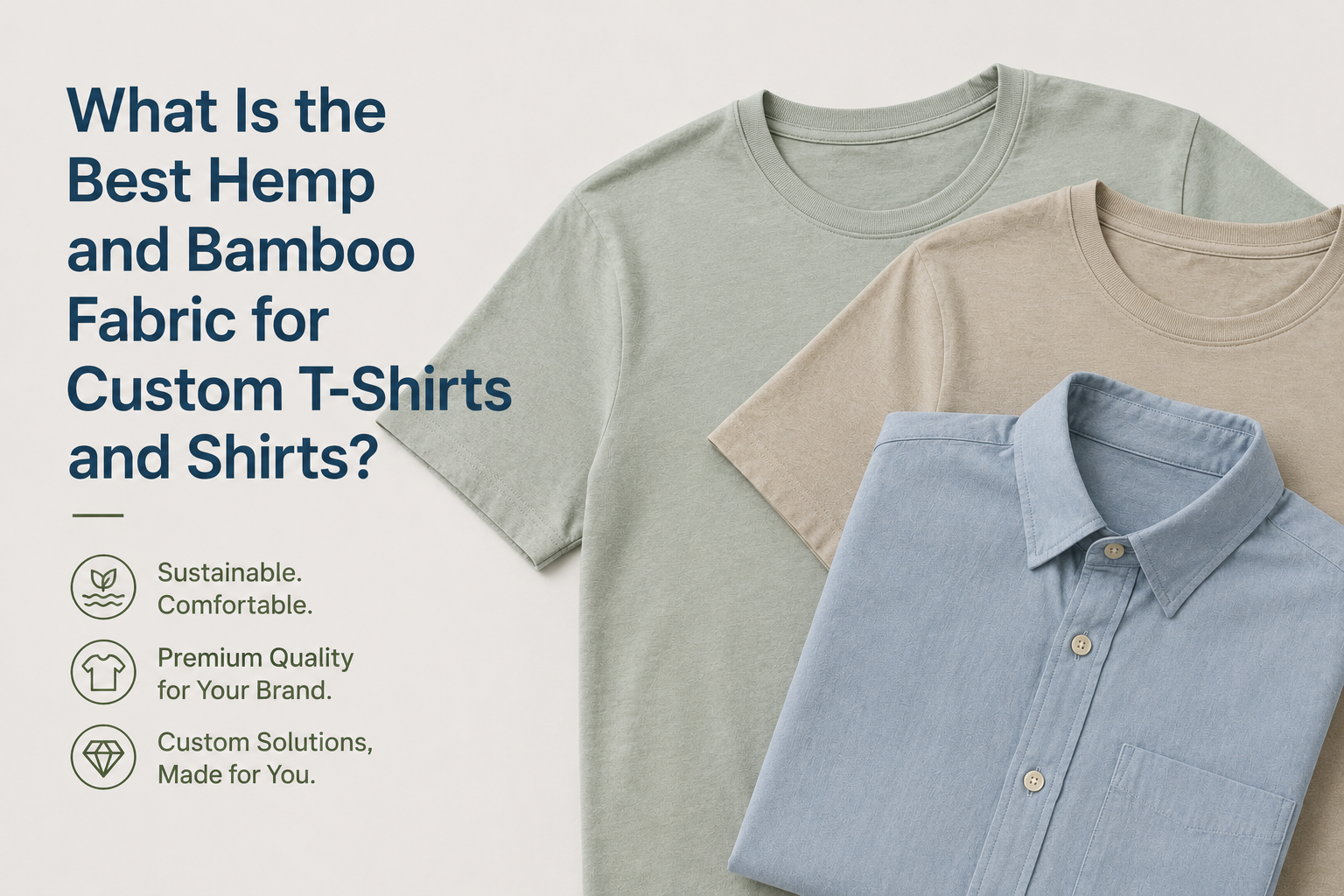
Hemp clothing manufacturers commonly work with 100% hemp, bamboo and hemp blends, and hemp cotton blends. Each fabric serves different product goals, from durability to softness and cost balance.

Let’s break this down in simple terms—no technical fluff.
100% Hemp
Strong, breathable, and very sustainable. But it can feel stiff if not finished correctly. Best for brands that value durability and raw texture.
Bamboo and Hemp
This is one of my favorites for modern sustainable clothing brands. Bamboo softens hemp naturally, making it ideal for loungewear and relaxed fits. Many brands exploring bamboo and hemp blends use it to improve comfort without losing eco-value.
Hemp Cotton Blend
This is often the gateway fabric into sustainability. Easier to control, familiar feel, and better cost balance. Ideal for brands scaling production or transitioning from traditional cotton.
Here’s a simple comparison:
| Fabric Type | Best For | Key Benefit |
|---|---|---|
| 100% Hemp | Workwear, basics | Durability |
| Bamboo + Hemp | Loungewear, pajamas | Softness |
| Hemp Cotton Blend | T-shirts, hoodies | Balance |
Your manufacturer should guide you here—not let you guess.
Why do production details matter more than MOQ?
MOQ feels important—until quality issues show up. Then MOQ becomes irrelevant.
For sustainable clothing brands, production control, lead time stability, and scaling ability matter more than low MOQs when choosing hemp clothing manufacturers.
I’ve seen brands insist on low MOQ, only to reorder three times due to quality problems. That costs more than starting right.
Ask about:
- Sampling timeline
- Bulk production lead time
- Shrinkage testing
- Final inspection process
For brands learning how to start a pajama company, these details are critical. Pajamas demand softness, skin comfort, and consistency. One bad batch can ruin repeat sales.
A strong manufacturer plans production like chess—not checkers.
How can hemp clothing manufacturers support long-term brand growth?
The best partnerships don’t feel transactional. They feel stable. Predictable. Almost boring—in a good way.
Reliable hemp clothing manufacturers support long-term growth by offering fabric development, stable quality control, scalable capacity, and honest production advice for sustainable clothing brands.

Brands grow. Styles expand. Orders fluctuate. Your manufacturer must keep up.
From my side of the table, long-term support looks like:
- Stable fabric sourcing
- Repeatable quality standards
- Clear payment and logistics terms
- Realistic production advice
At Taian Lianchuang Textile Co., Ltd, we work mainly with B2B brands in North America, Australia, and Europe. Many found us through Google or exhibitions. Almost all stayed because communication improved—not because prices dropped.
That’s the quiet truth of manufacturing.
Conclusion
Choosing the right hemp clothing manufacturer isn’t about chasing the cheapest quote. It’s about trust, clarity, and long-term thinking. When sustainable clothing brands choose wisely, production becomes smoother—and growth feels possible again.