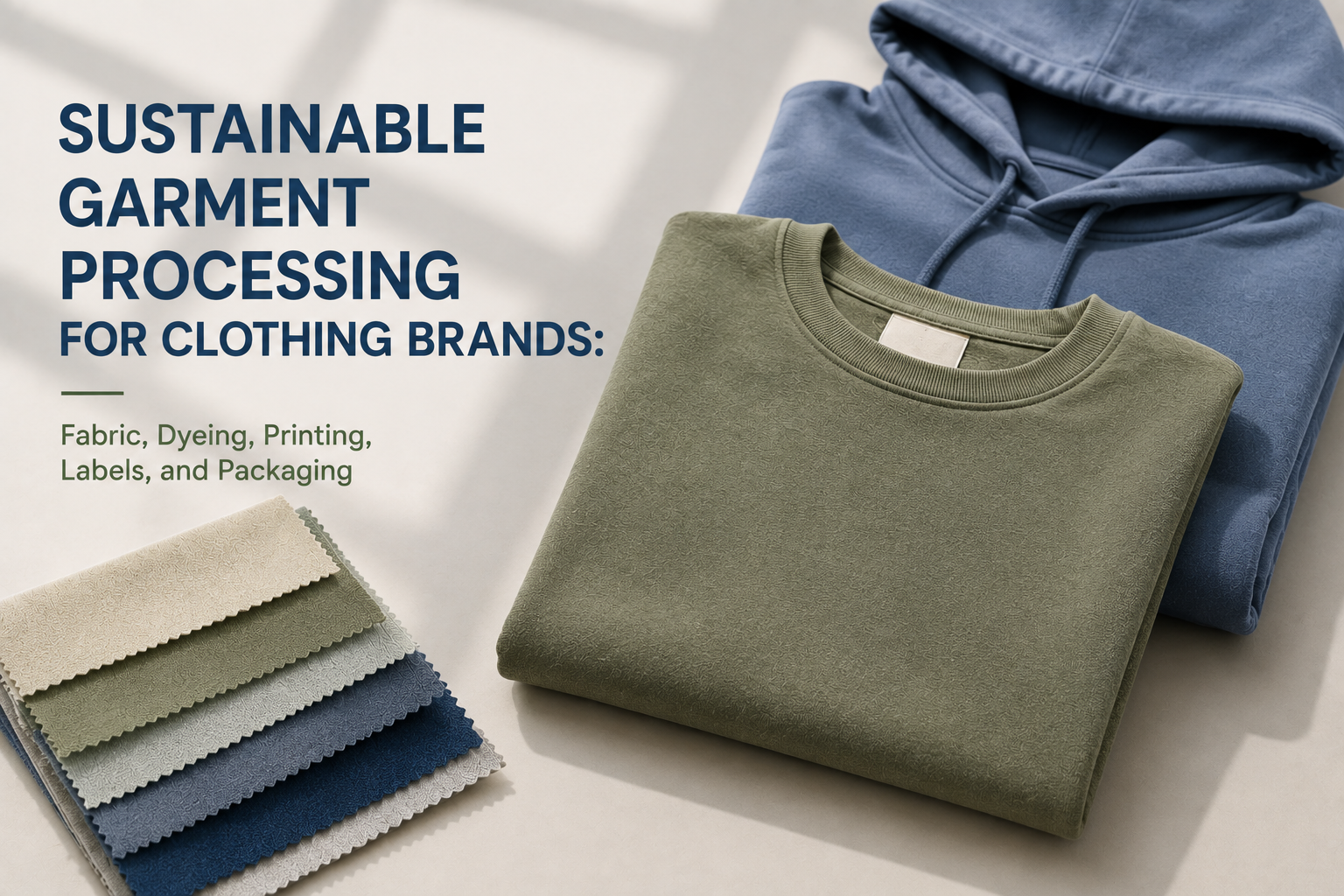
Hey, welcome back! Let’s talk about the most fiercely competitive item in the entire apparel world: the men’s t-shirt. I talk to brand owners every single day who are incredibly frustrated. You spend a fortune on customer acquisition, but your buyers never return because the shirts you sold them shrank or the collars stretched out after just two washes. At Taian Lianchuang Textile, we fix this exact problem.
To manufacture a profitable custom men’s t-shirt collection, brand buyers must source pre-shrunk organic cotton or hemp blends with a substantial weight of 200gsm to 220gsm. Partnering with a dedicated B2B clothing manufacturer ensures essential construction details, such as shoulder-to-shoulder taping and 1×1 ribbed neckbands, are strictly implemented. These techniques prevent the common issues of side-seam twisting and stretched collars. By managing the 6 to 8 weeks of bulk production with a factory that provides transparent communication and exact tech packs, brands can deliver a durable product that guarantees repeat customers.
You really don’t need a massive, complicated catalog to build a great men’s brand. If you can deliver one absolutely perfect t-shirt, guys will buy it in every single color. Let’s break down the exact engineering required to make a shirt that actually lasts.
Why Do Most Men’s Custom T-Shirts Shrink and Twist?
We all have a drawer full of t-shirts we refuse to wear. You know the ones. You washed them once, and suddenly the side seam is wrapping around your stomach like a candy cane. It is a massive problem for brand buyers who just want to sell a reliable product.
Most men’s custom t-shirts twist and shrink because the fabric is knitted in tight tubes and cut immediately without being allowed to relax. To prevent side-seam twisting, a quality manufacturer will pre-wash and pre-shrink the organic cotton fabric before any cutting occurs. This vital step releases the tension in the knitted yarn. When brands specify pre-shrunk organic fabrics in their tech packs, the final garment maintains its exact shape and fit, surviving countless laundry cycles without warping.
Let’s step onto the factory floor for a minute. I want to explain exactly why this happens, so you can stop it from destroying your brand’s reputation.
A few years ago, I had a client named David who ran a really cool men’s streetwear brand in California. He was a marketing genius. His Instagram ads were flawless. He bought a massive order of blank t-shirts from a massive wholesale distributor, screen-printed his graphics on them, and sold out in a weekend.
Two weeks later, the disaster hit. His customer service inbox was flooded with angry emails. The guys who bought the shirts were complaining that after one trip through the washing machine, the shirts had shrunk a full size, and the side seams were violently twisting toward the front of the shirt. David had to issue thousands of dollars in refunds. He was almost in tears when he called me.
The Hidden Cost of Cheap Blanks
Why did David’s shirts fail? It comes down to the physics of cheap manufacturing.
When a factory is trying to produce millions of cheap, wholesale blanks, time is their enemy. They knit the cotton fabric in giant, continuous circular tubes. To save money and maximize the yardage, they stretch that fabric as tight as they possibly can on the rolls. Then, they immediately slap a pattern on it, cut it, and sew it.
The fabric never gets a chance to breathe. It is in a state of extreme stress.
When your customer takes that t-shirt home and throws it into a warm washing machine, the water acts as a release valve. The stressed cotton yarns finally relax and try to return to their natural, untwisted state. The result? A ruined t-shirt and a lost customer.
Engineering for the Laundry Machine
When you switch from buying cheap blanks to partnering with a custom B2B manufacturer, you take control of the recipe. We don’t rush the fabric.
Before we ever take a pair of scissors to your organic cotton tees, we run the fabric through a pre-shrinking and washing process. We literally let the fabric rest on the tables. It sounds incredibly simple, but it is the most critical step in garment manufacturing.
By releasing the tension in the yarn before the garment is sewn, we guarantee that the shirt has already done all the moving it is ever going to do.
| Manufacturing Method | Fabric Treatment | Result After Washing |
|---|---|---|
| Cheap Wholesale Blanks | Stretched tight, cut immediately | Severe side-seam twisting, 5-10% shrinkage |
| Custom Cut & Sew | Pre-washed, relaxed before cutting | Seams stay straight, under 2% shrinkage |
When you sell a man a t-shirt that fits exactly the same on day sixty as it did on day one, you have won his loyalty forever. He will stop shopping anywhere else.
What Is the Best Organic Fabric Weight for a Men’s Tee?
Finding the right fabric weight is like walking a tightrope. If the shirt is too thin, it clings to the body and feels incredibly cheap. If it is too thick, your customer will sweat through it in ten minutes and never wear it again.
The ideal fabric weight for a custom men’s t-shirt depends on the season, but a versatile organic cotton knit between 200gsm and 220gsm is the industry standard for a structured drape. For hotter climates, blending organic cotton with hemp creates a highly breathable, durable shirt around 180gsm that naturally resists odor. Utilizing these specific weights ensures the t-shirt flatters the adult male physique without clinging, offering a substantial, comfortable feel that elevates the brand’s perceived value.
I want you to think about your favorite t-shirt. When you put it on, it probably makes you feel confident. It makes your shoulders look a little broader, and it skims over your stomach without hugging every single curve.
That magic feeling isn’t an accident. It is entirely dictated by a metric called GSM, which stands for Grams per Square Meter. It is how we measure the physical weight and density of the fabric.
The Cling Factor
Here is the biggest mistake I see startup brands make: they choose a fabric that is way too light. They will order a 150gsm or 160gsm organic cotton because it is slightly cheaper per yard.
For men’s clothing, this is usually a fatal error. A 150gsm t-shirt is tissue-thin. Unless your customer has the physique of a professional bodybuilder, a thin shirt is going to aggressively cling to every single imperfection. It drapes terribly. It feels flimsy in the hand, and from a consumer psychology standpoint, lightweight often translates to "cheap" in the buyer’s mind.
The Magic of the 220gsm Organic Cotton
If you want to build a truly premium everyday t-shirt, you need to look at the 200gsm to 220gsm range.
When you use a heavyweight organic cotton, the fabric has its own structural integrity. It falls straight down from the chest. It creates a clean, masculine, architectural silhouette. It feels substantial. When a guy picks up a 220gsm shirt in a store or takes it out of the shipping bag, his brain immediately registers it as a quality piece of clothing.
I worked with a brand in Europe that transitioned their entire line from 160gsm to a custom 210gsm organic cotton. Their return rate dropped by 40% in a single month simply because the shirts flattered their customers’ bodies better.
Hemp Blends for the Summer Heat
Now, what if your target market is in a sweltering climate like Australia or Texas? A 220gsm cotton shirt might be a little too warm for a 100-degree afternoon.
This is where fabric innovation comes in. Instead of just making the cotton thinner, we change the blend. I highly recommend looking at a sustainable hemp blend for summer collections.
Hemp is an absolute miracle fiber. It is naturally antibacterial, meaning it resists odor—a massive selling point for men’s apparel. It is also incredibly porous and breathable. We can knit an organic cotton and hemp blend at around 180gsm that is incredibly lightweight and cooling, but because hemp fibers are so strong, the shirt still maintains that crisp, structured drape that guys love.
Stop guessing with your fabrics. Choose a weight that solves your customer’s actual problems, and your sales will skyrocket.
How Do You Fix the "Bacon Collar" on Men’s Shirts?
Nothing ruins a man’s outfit faster than a wavy, stretched-out collar. In the industry, we call this the "bacon collar," and it is the absolute fastest way to lose a loyal customer. Let’s engineer a collar that actually works.
To prevent stretched collars on men’s t-shirts, manufacturers must use a dedicated 1×1 ribbed knit fabric specifically for the neckband, rather than folding the main body fabric over. Furthermore, implementing shoulder-to-shoulder taping provides a structural bridge across the back of the neck. This technique reinforces the garment, preventing the heavy weight of the sleeves from pulling the shoulder and collar seams out of shape, ensuring the t-shirt looks crisp and professional after heavy wear.
Look in the mirror the next time you put on a t-shirt. The collar is the frame for your face. If that frame is sagging, stretched out, or completely warped, the entire outfit looks incredibly sloppy, no matter how much the shirt cost.
Guys hate the "bacon collar." They hate when they have to stretch the neck opening to pull the shirt over their head, and the fabric never snaps back. It makes the shirt look like pajamas.
So, how do we fix it on the factory floor? It all comes down to the ribbing and the internal skeleton of the shirt.
The Science of the 1×1 Rib Knit
A lazy factory will just take a strip of the exact same fabric used for the body of the t-shirt, fold it in half, and sew it around the neck opening. This is a disaster waiting to happen. The body fabric (usually a jersey knit) is designed to drape, not to grip.
To build a premium collar, we use a completely different roll of fabric called a 1×1 rib knit.
If you look closely at a good collar, you will see tiny vertical lines. That is the ribbing. This specific knitting technique gives the fabric extreme elasticity and, more importantly, extreme recovery. It acts like a gentle spring. Your customer can pull the shirt over his head, stretching the collar wide open, and the exact second it passes his ears, that 1×1 rib knit violently snaps back to lay perfectly flat against his collarbone.
Why Taping is Non-Negotiable
But a good ribbed collar isn’t enough on its own. You have to support it.
Think about the physical weight of a t-shirt. When it is hanging on a hanger or draped over a body, the weight of the sleeves is constantly pulling downward on the shoulder seams. Over time, that constant downward gravity pulls the neck opening wider and wider.
To stop this, we use a apparel construction technique called shoulder-to-shoulder taping.
If you take a premium t-shirt and turn it inside out, look at the back of the neck. You should see a continuous strip of fabric sewn cleanly over the raw seams, running from the edge of the left shoulder, across the back of the neck, all the way to the edge of the right shoulder.
| Construction Detail | Purpose | Benefit to Customer |
|---|---|---|
| 1×1 Ribbed Neckband | Provides stretch recovery | Collar never gets wavy or sags |
| Shoulder Taping | Reinforces the seam structure | Prevents sleeves from stretching the neck |
| Twin Needle Topstitching | Locks the collar to the body | Collar lays perfectly flat after washing |
That piece of tape acts like a steel beam in a building. It locks the entire upper structure of the shirt in place. It makes it physically impossible for the sleeves to pull the neck out of shape. When you combine the ribbed neckband with the shoulder taping, you create an indestructible t-shirt that a guy can wear to the gym, wear to the bar, and wash a hundred times without it ever losing its crisp, clean look.
How Can You Avoid Factory Delays for Your Summer Launch?
You can have the best t-shirt in the world, but if it arrives at your warehouse two months after summer ends, your business is in serious trouble. Factory delays are terrifying, but they are entirely preventable with the right planning.
Brand buyers can avoid factory delays by locking in their tech packs and finalizing lab dips at least four months before their intended launch date. Because bulk production for custom men’s t-shirts requires 6 to 8 weeks, plus 4 to 6 weeks for ocean logistics, early planning is non-negotiable. Partnering with a communicative B2B manufacturer that provides weekly visual production updates eliminates the "silent supplier" anxiety, ensuring your organic clothing collection arrives on time for the peak selling season.
There is a very specific type of panic that brand buyers experience. It happens when you wire a massive deposit to an overseas supplier, and then… nothing. You wait a week, send an email asking for a production update, and the sales rep replies three days later with a thumbs-up emoji.
It is maddening. You have marketing campaigns scheduled, you have photo shoots booked, and you have no idea if your t-shirts are actually being made.
Escaping the "Silent Supplier" Trap
Most delays happen because of terrible communication. You are usually dealing with a sales rep who has never stepped foot on the sewing floor. They are just a middleman passing messages.
When you want a specific custom color—let’s say a faded, vintage olive green for your new men’s collection—the factory has to mix a custom dye recipe, create a small fabric swatch (a lab dip), and mail it to you for approval. If the communication is bad, that simple process can drag on for a month.
At Taian Lianchuang Textile, we banish the "silent supplier" routine. We assign you a dedicated project manager who gives you weekly, visual updates. We send you videos of your olive green fabric being dyed. We send you photos of the first t-shirt coming off the line with a measuring tape across the chest, so you know the sizing is perfect.
The Timeline Math You Can’t Ignore
You also have to respect the math of international manufacturing. You cannot hack time.
If you want to launch your new men’s summer t-shirt collection on May 1st, we need to work backward.
- Ocean freight and customs clearance: 4 to 6 weeks.
- Bulk cutting and sewing: 6 to 8 weeks.
- Sampling and Tech Pack approvals: 2 to 3 weeks.
That means if you want a May 1st launch, you need to be having your first serious conversation with us in early January.
When you map out your overseas logistics planning properly, and you partner with a factory that uses visual QC and transparent timelines, the anxiety disappears. You stop worrying about missed deadlines and start focusing entirely on selling out your inventory.
Conclusion
A great men’s t-shirt isn’t just a piece of fabric; it is a functional piece of engineering. By choosing pre-shrunk organic materials, the perfect GSM weight, structured collars, and aggressively managing your production timeline, you will create a product your customers will love and buy repeatedly. Let’s build your next collection today.