A hem tag looks like a tiny detail. In real production, it is not. I’ve seen good-looking T-shirts lose points because the label felt awkward, looked off-balance, or started curling after washing.
If you are building a clothing brand, the right hem tag placement is not only about style. It also affects comfort, consistency, and how polished the final garment feels.
The safest and most common option is to place the hem tag near the lower side seam, usually on the wearer’s left side. This position gives good brand visibility without making the shirt feel uncomfortable. But the best placement still depends on your fit, hem construction, label size, and the image your brand wants to create.
Why does hem tag placement matter so much?
A hem tag is small, but people notice it more than you think.
When a customer touches a shirt for the first time, small details shape the first impression. A label that sits cleanly near the hem can make the garment feel intentional. A label that looks crooked, bulky, or too close to the fold can make the whole shirt feel cheaper.
From a factory point of view, hem tag placement matters for four reasons:
- comfort
- brand visibility
- sewing consistency
- wash durability
That is why I always tell brands not to decide label placement only by looking at a flat sketch. A label may look good in a mockup, but once it is sewn into a real side seam, worn on a real body, and washed a few times, the result can change.
If you want a broader view of label placement across the whole garment, this article will help: From Neck to Hem: Where Should Labels Go in Modern Apparel?
What is the most common place for a hem tag on a T-shirt?
For most adult T-shirts, the most practical position is:
near the bottom side seam, usually on the left side, slightly above the hem edge.
That placement works well because it keeps the label visible but not too aggressive. It also reduces the chance of the label scratching the skin or folding in a strange way after washing.
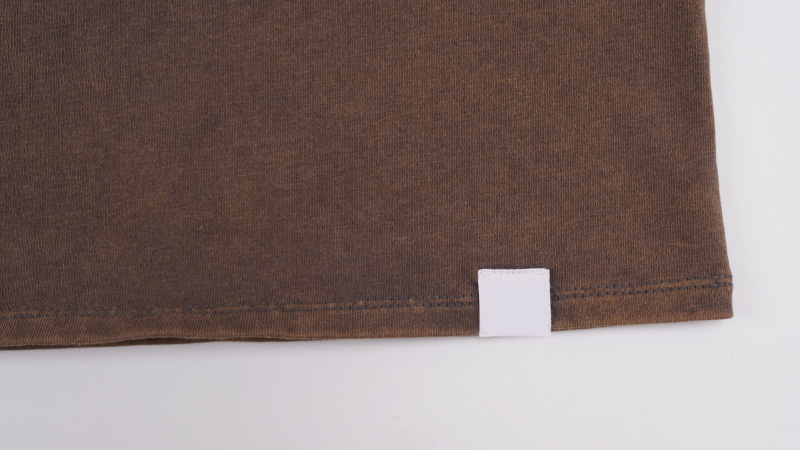
In most cases, brands choose one of these three options:
1. Side seam near the hem
This is the most common option.
It is easy to control in production, easy to repeat across bulk orders, and usually looks clean on both basic tees and fashion tees. If a brand wants a quiet but clear branding touch, this is often the best answer.
2. Front hem
This is more visible and more fashion-driven.
It can work for streetwear or trend-led products, but it also has more risk. If the label is too large, it can distract from the garment. If it is too close to the fold, it can twist or flip outward in an awkward way.
3. Back hem
This can look premium, especially on minimalist products.
But it is less common than the side seam position, and sometimes it creates friction when the garment is worn with backpacks, belts, or layered outfits.
For most B2B brands, I still recommend starting with the side seam unless there is a very strong design reason to do otherwise.
How far should a hem tag sit from the bottom hem?
This is where many sampling mistakes happen.
A lot of tech packs say things like “add hem label at bottom” or “place woven tag near hem.” That sounds clear, but in production it is not enough. Factories need exact placement logic.
In general, brands often test a placement that sits slightly above the bottom hem rather than directly inside the fold edge. This helps the tag stay visible and reduces distortion after washing.
What matters most is not chasing one “universal perfect measurement.” What matters is making sure the placement is:
- far enough from the fold to stay clean
- close enough to feel intentional
- consistent across all sizes
At Taian Lianchuang Textile Co., Ltd., one thing we see often is that the label itself is fine, but the placement is too close to the hem fold. After washing, the edge starts pulling, the label curls, and the shirt suddenly looks less premium than it should.
That is why sample approval matters so much. Before bulk production, always check:
- placement on body
- appearance after washing
- seam stability
- whether the tag scratches when worn
Should the hem tag be inside or outside?
This depends on what job the label needs to do.
If your goal is brand visibility, an outside hem tag makes more sense. It acts like a small signature.
If your goal is comfort and a cleaner look, an inside placement may work better.
Neither is automatically right or wrong. The better question is this:
Do you want the label to be seen first, or felt less?
Outside labels are often used by brands that want a subtle but visible identity. Inside labels are often chosen by brands that want a cleaner surface and a quieter finish.
For activewear or highly fitted products, comfort usually deserves more weight in the decision. If your collection is performance-based, you may also want to read: Are Tagless (Heat Transfer) Labels Better Than Sewn-In Labels for Activewear?
What should you write in the tech pack for hem tag placement?
This is one of the easiest ways to avoid confusion.
Instead of writing:
- add label at hem
write something closer to:
- place woven hem tag at wearer’s left side seam
- label to sit slightly above bottom hem
- center fold label
- soft backing or folded edge if needed
- confirm placement on pre-production sample
The more specific you are, the easier it is for the factory to repeat the same result in bulk.
Good factories care about this level of detail because label placement affects QC. A shirt with a good body but poor label consistency still creates complaints.
If you are still deciding what type of manufacturing partner can handle these kinds of details well, this guide will help: Best Clothing Manufacturers in 2026: A Practical Guide for Growing Brands
What should brands test before bulk production?
Please do not skip this step.
Before bulk production, test the label in real conditions:
Wash test
Wash the shirt several times and see whether the tag curls, shrinks, twists, or pulls the seam.
Friction test
Wear the shirt for a while and check whether the label scratches or rubs against the skin.
Visual balance check
Put the sample on a body, not only on a table. Some placements look fine flat but feel wrong when worn.
Bulk consistency check
Ask the factory whether the same placement can be repeated accurately in production.
Small details like this separate “sample looks good” from “bulk goods stay good.”
Final thoughts
The best hem tag placement on a T-shirt is usually near the lower side seam, but the real answer depends on your brand style, fit, and production method.
If you want a safe place to start, choose the side seam near the hem, test it well, and make the tech pack more specific than you think is necessary.
If you are building a full label system, I’d suggest reading these next: