If you have ever worn activewear with an itchy neck label, you already know why this question matters.
For performance garments, labels are not just a branding detail. They affect comfort, wash durability, and sometimes even how premium the product feels. In activewear, small discomfort becomes a big issue very quickly, because movement, sweat, and repeated washing make every weakness show up faster.
tagless heat transfer labels are usually better for comfort, while sewn-in labels are often better for long-term durability and carrying more information. For many brands, the best solution is not choosing only one. It is choosing the right role for each.
Why are tagless labels popular in activewear?
The biggest reason is simple: comfort.
Activewear is worn during movement. The fabric stretches. The body sweats. The skin rubs against seams and trims. A thick sewn label in the wrong place can become annoying much faster than it would on a regular loose T-shirt.
That is why tagless heat transfer labels are popular in:
- sports T-shirts
- leggings
- compression tops
- yoga wear
- lightweight training sets
They remove the “physical tag” feeling. The garment surface stays cleaner. The inside of the neck or waistband feels smoother.
And from a branding angle, tagless labels also look modern. Many brands like the cleaner inside finish, especially in premium activewear.
If you are also working on visible branding details outside the garment, this article pairs well with this topic: Where Should a Hem Tag Be Placed on a T-Shirt?
Are sewn-in labels still better in some cases?
Yes. Absolutely.
This is where the conversation gets more honest.
Tagless labels sound great, but they are not magic. In some situations, sewn-in labels are still the more reliable choice. For example:
- when the garment needs to carry more detailed information
- when wash durability matters more than ultra-smooth comfort
- when the fabric surface is difficult for heat transfer performance
- when the brand wants a woven or premium tactile identity
Sewn-in labels can also be easier to inspect during bulk QC because they are physical components. With transfers, the risk is often not visual at first. A print can look fine at the sample stage, then start cracking or fading later if the process is weak.
So the better question is not:
Which one is better in general?
The better question is:
Which one is better for this product, this fabric, and this market?
What are the biggest risks with tagless heat transfer labels?
This is where many brands get surprised.
A heat transfer label can look excellent on day one. Then after several washes, problems start showing up.
The most common issues are:
Cracking
The print surface starts breaking, especially on stretchy fabrics or high-movement areas.
Peeling
The transfer edge lifts because the bonding was not strong enough or the fabric finish affected adhesion.
Fading
The print loses clarity after repeated washing, sweat exposure, or rubbing.
Transfer inconsistency
The print position or pressure changes from one production batch to another.
This is why I always tell brands: do not judge a tagless label only by how it looks on the first sample.
You need to test it like a performance component.
At Taian Lianchuang Textile Co., Ltd., when we evaluate label options for custom activewear, we care less about the first impression and more about what happens after wear, sweat, and laundry. A label that looks clean in the photo but fails after training is not a good branding choice.
What should brands test before approving tagless labels?
If the product is activewear, at minimum, test these:
1. Wash durability
Wash the sample multiple times and check whether the print stays readable and smooth.
2. Rubbing resistance
See whether friction weakens the print or causes visible wear.
3. Sweat-related performance
Activewear lives in a sweat-heavy environment. Labels should be checked under real-use conditions, not only dry studio conditions.
4. Stretch behavior
If the fabric stretches a lot, the label must stretch with it or at least stay stable without cracking.
5. Skin comfort
Wear test it. This sounds obvious, but many brands forget. Real wear reveals more than spreadsheets.
If your whole activewear range is built around sustainable materials, it also helps to read:
- Hemp vs Bamboo Clothing: Pros, Cons & Sustainability Compared
- Organic Cotton vs Hemp Clothing: Which Is More Sustainable in 2026?
Those two articles help you connect label decisions with material performance and product positioning.
Is the best choice actually a hybrid system?
In many cases, yes.
A lot of brands do better with a mixed solution instead of a strict one-side decision.
For example:
- use tagless for size, logo, or simple inside branding
- use a sewn-in care label somewhere less irritating if detailed information is still needed
- use an outside branding element, such as a hem tag, for visual identity
This approach gives you more flexibility.
You keep the comfort advantage of tagless placement in high-contact areas, but you do not force one label type to do every job.
That is often the smartest manufacturing answer: not more complexity, but better role separation.
How should brands decide between tagless and sewn-in labels?
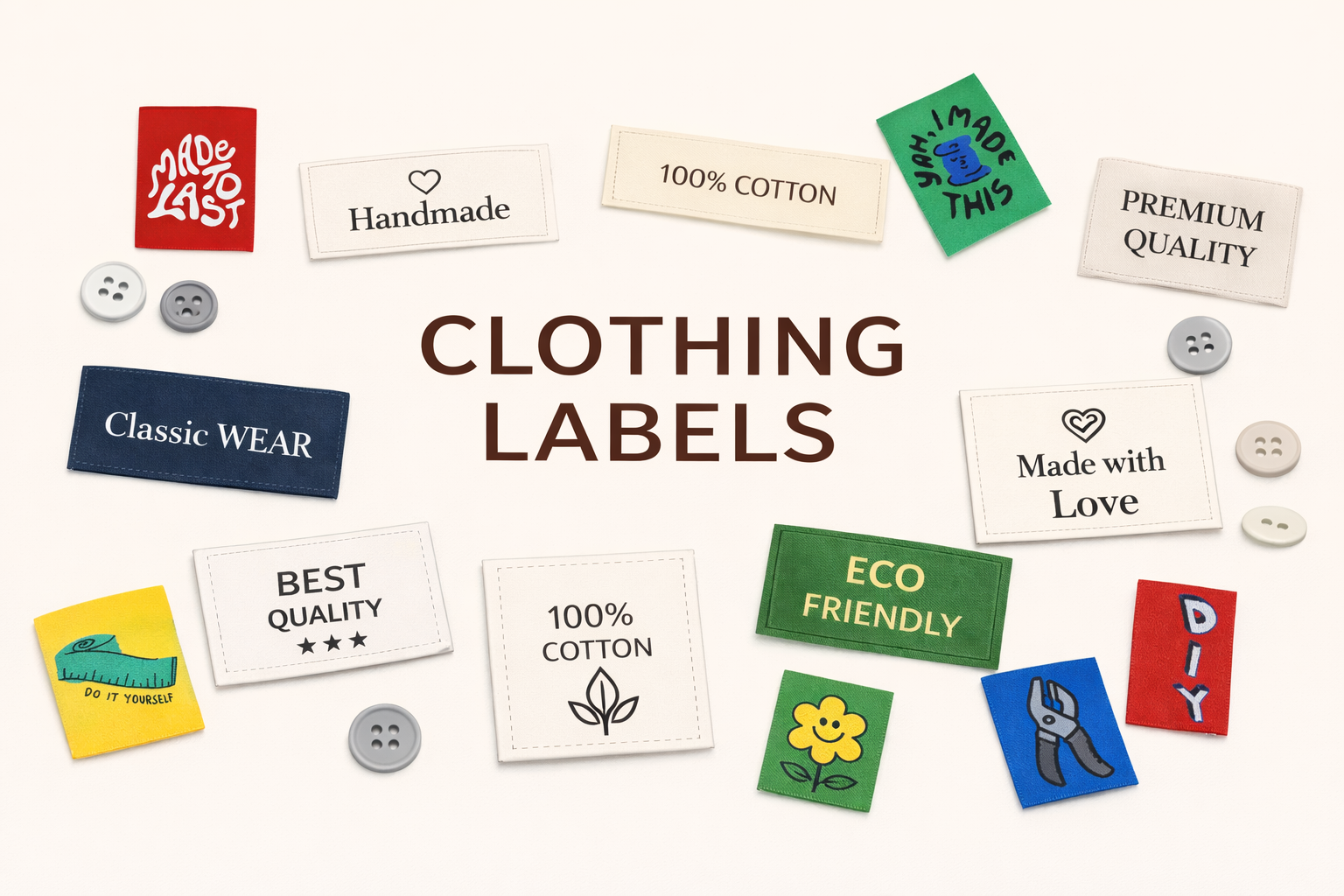
I usually suggest using this filter:
Choose tagless if:
- comfort is the top priority
- the product is close to skin
- the design style is clean and minimal
- the fabric and print process have been tested properly
Choose sewn-in if:
- the garment needs stronger long-term label stability
- more information must be carried
- you want a tactile premium detail
- your supply chain is more reliable with sewn components
Choose a hybrid if:
- you want both comfort and information control
- the collection includes multiple garment types
- the brand is scaling and wants fewer complaints
This decision is not only about labels. It is part of a bigger production system.
That is why this page should also support your broader manufacturing funnel. If you are reviewing factories, trims, QC, and production stability, read:
- Best Clothing Manufacturers in 2026: A Practical Guide for Growing Brands
- What Sustainable Clothing Production Really Means for Brands
- Solutions
Final thoughts
Tagless labels are usually better for comfort in activewear. Sewn-in labels are often stronger for durability and information carrying. The best choice depends on your fabric, wash expectations, branding style, and market requirements.
For many activewear brands, the most practical answer is a mixed system rather than a strict either-or choice.
And if you are developing a custom activewear line, label decisions should be made early, not at the very end. Small details like this affect comfort, customer reviews, and how professional the finished garment feels.